For professionals working with adults impacted by childhood developmental trauma and CPtsd

NeuroSynqt™ Integration Architecture • Built for actual sessions • CPtsd Certification Program

NeuroSynqt™  Practitioner  - CPtsd: Trauma and Narcissistic Abuse Recovery Series

When adults with CPtsd and developmental trauma remain organised around the same survival patterns despite insight, awareness and genuine effort, it is not weakness. It reflects a brain still operating through adaptations formed under earlier conditions.

For practitioners working with CPtsd, developmental trauma, trauma bonding, relational collapse, self doubt and survival based identity.

You can build strong rapport, validate what the client survived and explain the neuroscience clearly, yet still watch the same survival structures return between sessions.

The Difference

Without Prac 1 vs 
With Prac 1

Write your awesome label here.
Linda Meredith 
Registered Training Provider · NeuroSynqt™ Creator

Without Prac 1


The right work is being done. The pattern continues to re-establish under relational pressure.

With Prac 1


The work aligns with how the brain adapted, so change becomes possible.

Sound familiar?

If this is showing up in your sessions

Your client is trying to make sense of what happened in the relationship.
At times they can see the harm clearly. At other times they question it.

They find themselves missing the person, even when they know the relationship was painful. They second guess their reactions. There is a pull they cannot fully explain.

They have left the relationship. Contact has stopped. The pull has not.

The replaying, the self doubt, the questioning of what they did or did not do. They keep returning to the same place, even when they are trying not to.

You have worked through what happened. You have validated their experience. You have helped them make sense of it.

Yet they still struggle to trust their own memory. They check, they hesitate, they defer to others in moments that require self trust.

Adult children of narcissistic parents minimise what happened.
They organise their lives around approval or avoidance without fully realising it.

The roles they developed early still shape how they relate, how they decide and how they see themselves.

Different presentations keep showing up, but the response often stays the same.

Some clients withdraw. Some over explain. Some take responsibility for everything. Some cannot locate themselves in the interaction at all.

You are doing the work. The client is engaged. There is progress in understanding.

But something holds. The same points return. The same responses reappear. And it is not clear why.

This is the work Practitioner 1 was designed to support.

Why Regulation Alone Does Not Resolve Narcissistic Relational Trauma


Regulation is essential in trauma recovery. However, regulation capacity develops within integrated brain systems rather than as an isolated skill.

In narcissistic relational trauma, disruption occurs at the level of identity trust, reality testing, and attachment security. These are integration functions, not simply activation states.

Stabilisation strategies can reduce distress. Yet when manipulation impact, shame based identity protection, and trauma bonding reinforcement remain unaddressed, clients may appear regulated while remaining structurally organised around survival.

In CPtsd presentations linked to narcissistic abuse, sustainable regulation follows integration alignment - not the other way around.

Elective 2 focuses on the structural mechanisms regulation does not reorganise in narcissistic abuse recovery: trauma bonding loops and shame based identity protection.

Dr Dan Siegel

Every form of self regulation we’ve been able to examine
Regulating attention
• Regulating emotions or affect
• Regulating mood
• Regulating thought
• Regulating physiology
• Regulating relationships
• Regulating behaviour
Every aspect of regulation we could explore depends on integration of the brain.

The Shift

Here is what changes when you have the right framework in place:

The issue is not whether the survivor understands what happened. It is whether the brain systems that organised around the relational environment can be restructured.

Collapse between sessions read structurally

Why does the survivor keep landing in the same place between sessions? The brain is repeating the organisation it learned under survival conditions, not relapsing or regressing. Pattern repetition is what the survival wiring does. It is not a failure of progress and it is not a breakdown of the work.

Insight and structural change separated cleanly

Why does cognitive insight about the abuser leave the bond intact? The set of interacting brain regions cannot rewire when the brain is in survival mode. Information cannot shift the brain. Knowing the narcissist's playbook will not stop the replay in the client's life.

Missing the abuser located neurologically

Why does the survivor miss the person who hurt them? The brain was conditioned to seek relief from the abuser and the pattern is still running even when no one is there to seek. This is not unresolved love and it is not emotional weakness. It is neurological conditioning doing exactly what it was trained to do.

Gaslighting recovery sequenced through identity repair

Why does the survivor still doubt their own perception after the tactics have been named? Tactic recognition happens at the level of information. Identity erosion sits at the structural level underneath. The reality testing infrastructure was damaged during the abuse. Naming DARVO does not repair it.

Subtype fallout mapped to recovery pathway

Why do some survivors present completely differently from others who went through what looks like the same thing? Overt, covert, communal, malignant, somatic, cerebral and parental presentations are distinct entrapment patterns. Each one traps the survivor differently. Each one produces different fallout. One recovery pathway will not fit them all.

Developmental narcissistic trauma addressed at its own layer

Why does narcissistic parent work keep collapsing into adult relationship work? Narcissistic parenting organises the survivor's identity at the developmental layer where the brain was still forming. The golden child role, the scapegoat role, enmeshment dynamics and loyalty wiring were wired in long before adult communication patterns. They do not sit on the same layer.

NeuroSynqt™ principles

NeuroSynqt™ recognises CPtsd as a developmental integration injury rather than a behavioural or diagnostic issue.


It approaches adult presentation through structural formulation, identifying survival organised adaptations that influence access to cognition, motivation and relational engagement.


NeuroSynqt™ does not assume a single recovery pathway. Application, sequencing and clinical use are taught exclusively within accredited education and supervision.

Write your awesome label here.
Integration before regulation
Regulation does not develop in isolation. It emerges when deeper integration is present.
Access before behaviour
Behaviour reflects what the brain can access in the moment, not simply what the person wants to do.
Structure before strategy
Intervention is aligned to structural organisation, not layered over it.
CPtsd as injury, not diagnosis
Intervention becomes more effective when it aligns with what is actually happening underneath.

Sherry Yuan Hunter

CEO Sandwich Parenting
“Linda Meredith brings complex trauma research together in a way that is actually usable in practice.
The program is flexible, practical, and focused on embodiment - not memorising information. I consistently have ‘ah ha’ moments that translate directly into my work with clients.
It feels like having ongoing support right there when I need it.”

Part of the NeuroSynqt™ CPtsd Certification Program. CEUs available. Instant access on enrolment.

Here is what Prac 1 covers

Six training courses, each building structural clinical application, beyond awareness of the narcissistic wound.

Training Course One
Identity, Brain States & Access

W

Training Course Two
F

Why

Training Course Three
The T

Why

Training Course Four
G

Why

Training Course Five 
N

Wh

Training Course Six
D

Why d

Write your awesome label here.
Linda Meredith 
Certified Complex Trauma Professional · NeuroSynqt™ Creator

The Story

Why Prac 1 was built

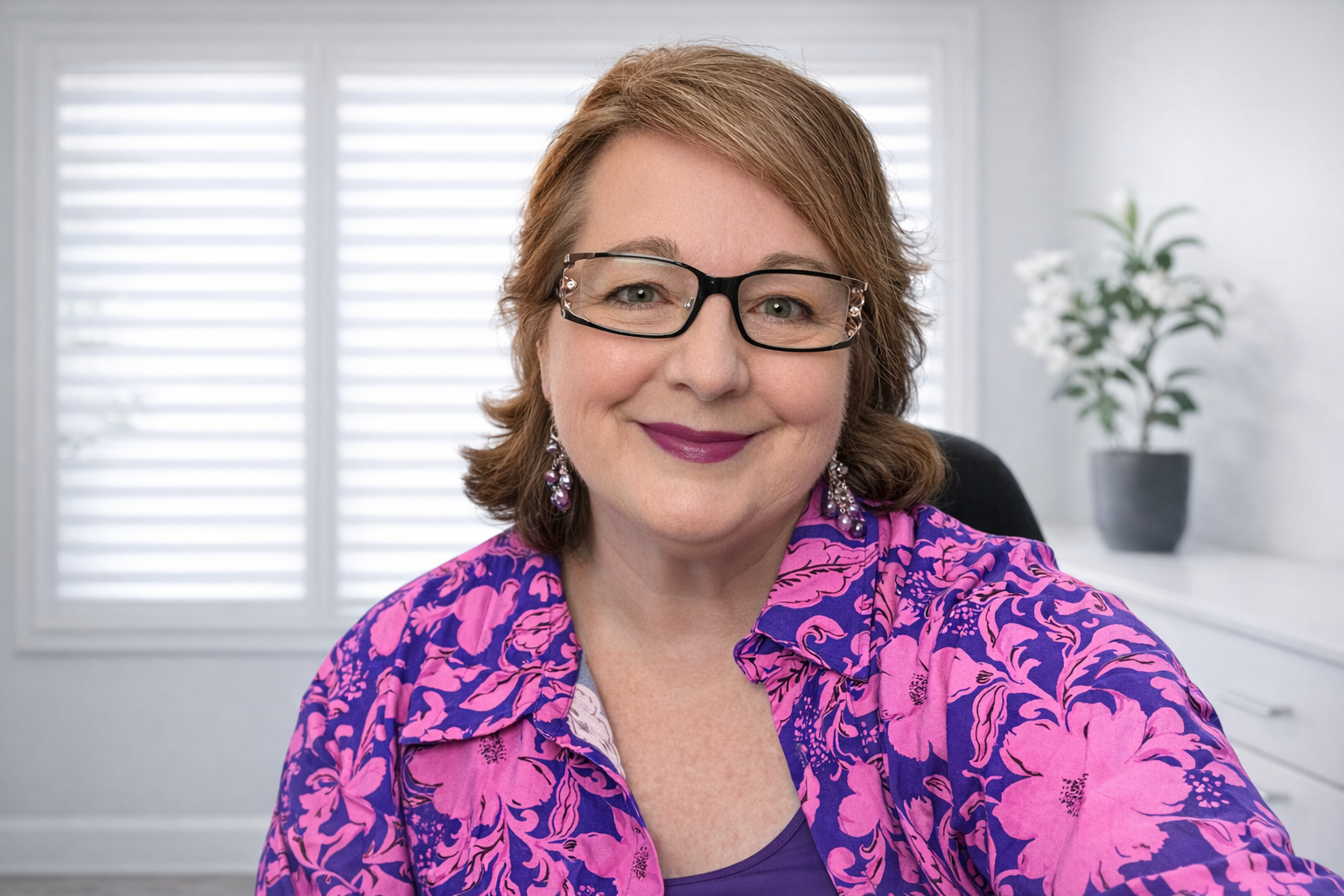
Hi, I am Linda Meredith, a Certified Complex Trauma Professional, Registered Training Provider and creator of NeuroSynqt™. I educate practitioners globally in developmental trauma and the neuroscience behind CPtsd recovery.


🌎
Practitioners trained globally
 
Registered Training Provider
CEUs
Available for this program
 
Peer reviewed for accreditation


What you'll receive inside Prac 1

What working with Elect 2 looks like in practice
Designed for real world application, not just theory

Single enrolment. Instant access. Everything you need to build a structural foundation for developmental trauma practice.

Core Training Materials

Six courses with structured slide content and downloadable PDFs. Full course access across all six areas, including reference materials and client homework.

Student Hub

Portfolio and Formal Assessment

Structured portfolio completion and formal assessment. Competency is assessed, not assumed. Designed to reflect real application, not recall.

Client Material and Practitioner Tools

Client ready Canva templates, ebooks and application tools you can customise and use in your own practice. Designed to support clear communication and practical application.
Group supervision, certification guidance, promotional resources, self care tools and structured steps to certification, all accessible within the hub.

Research, Key Reads and Business Tools

Course specific references for each of the six courses. Key book recommendations, business tools, templates and practical resources to support your work.

🌐 24/7 On Demand Access via LearnWorlds

Flexible learning that fits your daily rhythm. Access from anywhere at your own pace, with lifetime updates included.

NeuroSynqt™ Scope, Integration & Billing Guide

Understand how Elect 2 fits within your existing professional role, licence and billing structure - wherever you are practising globally.

 NeuroSynqt™ CPtsd Integration Series Outline

Upon completion of Prac 1, practitioners will be able to:

✔ D


Write your awesome label here.

NeuroSynqt™ - Scope, Integration and Billing Guide

NeuroSynqt™ is designed to sit within your existing professional practice - not replace it. It is not a separate profession, licence or standalone service.

This guide covers how Elect 2 integrates with your existing role, how sessions remain billable under your current licence and what you need to know about professional insurance and jurisdictional practice - wherever you are working globally.
 NeuroSynqt™ informs your formulation, integration and stabilisation work - your sessions remain counselling, psychotherapy, therapeutic consultation or professional services as defined by your licence

 You remain practising under your existing licence or registration — NeuroSynqt™ shapes the framework, not the professional identity

 For coaches and allied practitioners - work remains within education, coaching or non-clinical support. NeuroSynqt™ does not grant permission to diagnose, treat or claim clinical outcomes

 IICT Members and Students may list NeuroSynqt™ as part of their professional practice, enabling access to professional indemnity and public liability insurance

 Jurisdictional guidance included - licensure and practice permissions vary by country and, in the US, by state

Write your awesome label here.

Grounded in Research. Applied in Practice.

Bringing research and lived experience together

This elective addresses 
Early relational and environmental threat shapes long term fear signalling patterns
Trauma impacts perception, cognition and identity organisation - not just emotion
Insight may increase while integration capacity remains inconsistent
Behavioural activation may fail when internal states are not structurally aligned
Professional burnout increases when structural formulation is unclear

Questions You Might Already Be Asking

Clear, practical answers so you can decide if Prac 1 is the right next step.

What does Prac 1 cover that standard trauma training doesn't?

Most training covers symptom recognition and regulation approaches. Core 5 addresses what is structurally organising the inconsistency - dissociation-driven motivational patterns, state dependent access and integration capacity - which is the layer most training skips entirely.

My client just seems unmotivated. Will this still help?

Yes — and this is exactly where Core 5 starts. Apparent lack of motivation in developmental trauma presentations is often structural, not dispositional. Core 5 gives you the framework to identify what is actually happening and respond to it accurately.

Do my clients need to present with obvious dissociation?

No. Core 5 addresses functional dissociation in apparently competent adult presentation - which is the version most practitioners are seeing in session without being able to name it clearly. Overt dissociative presentations are covered, but they are not the primary focus.

 Is this too advanced for me?

Core 5 is marked as advanced professional training. It builds on foundational trauma understanding. If you are working regularly with adult clients impacted by developmental trauma and finding that standard approaches are not holding, Core 5 is likely the right level.

Can I use this in real sessions straight away?

Yes. Core 5 is built for actual sessions — the decisions you make mid-session, the pacing judgements, the moments where you need to know whether to push or pause. Component Five applies everything directly to real clinical scenarios.

Does this replace what I already do?

No. NeuroSynqt™ integrates into your existing approach — it does not replace your modality, your licence or your professional identity. It strengthens and organises the work you are already doing. Your sessions remain billable under your existing professional role.

❓ Is this accredited and are CEUs available?

Yes. Core 5 is part of the NeuroSynqt™ CPtsd Certification Program. Six CEUs are available. The program is peer-reviewed for accreditation and delivered by a Registered Training Provider.

How do I access the training?

Access begins immediately on enrolment via LearnWorlds. You can study at your own pace, on any device, 24/7. All course materials, portfolio resources and curriculum tools are available from the moment you enrol.

Testimonials

Some feedback from our students

We are dedicated to empowering you with knowledge, skills, and confidence to provide immediate answers to your clients.

Easier to work with CPtsd Clients

The course was the right mix of technical and non-technical elements. The course was also interesting, as I learned a lot about complex trauma and how this would apply for individual clients in the real world. Linda Meredith did a good job of communicating and making it easier to work with my  clients with CPtsd.
Paula w.

Real world application

The course taught me in a very friendly and engaging way. The course material was really helpful in preparing my skills and knowledge needed in the real world. It was well structured and the content was interesting and relevant. The materials were excellent, the mentoring approach was excellent and the free supervision helped me get my business off the ground.
Gina F.

Ease of use Professionally

The courses are taught by Linda Meredith who is highly experienced and knowledgeable. Linda clearly understands the importance of working with clients with complex trauma and takes the time to ensure you understand the information in a way that is easy to grasp and use with clients. 
Lisa A.

Enrol Now

When the survivor work is sound and the pattern still returns,
this is the missing layer.

Your clients deserve care that clarifies what is happening structurally.
Care that identifies the one next step.

'Enrol in Elective 2 and get the structural framework that makes your existing work move.'
For practitioners working with adult survivors of narcissistic abuse inside CPtsd.
Part of the NeuroSynqt™ CPtsd Certification Program. CEUs available.'

Practitioner 1 - MPCT - NeuroSynqt™
Accredited Professional Certification Pathway
Master Practitioner of Complex Trauma - NeuroSynqt™ (accredited globally) 
Certification is optional. CEU hours available for professionals.

Supporting integration that addresses intergenerational trauma at its source

By addressing developmental trauma at the level of organisation, NeuroSynqt™ supports:

  • more stable identity across contexts
  • improved relational capacity
  • consistent behavioural change
  • reduced reliance on coping cycles

This is where recovery becomes sustainable - not cyclical.


Stay connected:
Follow us on social media using the links below and sign up for our newsletter to receive special offers and updates on new content.
Created with