NeuroSynqt™ Professional Certification in Complex Trauma
Practitioner of Complex Trauma – NeuroSynqt™ (PCT)
Master Practitioner of Complex Trauma – NeuroSynqt™ (MPCT)
Neuroscience based professional education in childhood developmental trauma, Complex Ptsd and clinical integration.




When Professional Knowledge Does Not Fully Explain What You Are Seeing
Professionals working with adults impacted by childhood developmental trauma may already bring substantial training, experience and established ways of working to the therapeutic relationship.
Yet some presentations remain difficult to understand within one theoretical or clinical frame. Progress may be evident in one area while becoming less available in another, particularly where relational stress, identity, emotional functioning or longstanding survival responses remain relevant.
For the practitioner, this can create a familiar professional question: what else needs to be considered when the client understands their experience, engages with the work and still encounters persistent difficulty?
NeuroSynqt™ professional education places these presentations within a wider developmental trauma and Complex Ptsd framework, providing additional context for professional enquiry without replacing the qualifications, modalities or clinical judgement you already bring.
NeuroSynqt™ certification provides a structured pathway for practitioners who want to develop that learning across developmental trauma, neuroscience based education and professional application.
Is NeuroSynqt™ Professional Certification Right for You?
Two Professional Certification Credentials
PCT and MPCT recognise completion of the same NeuroSynqt™ certification education, assessment and portfolio pathway. The distinction between the credentials reflects the professional qualification foundation the practitioner brings to that pathway.

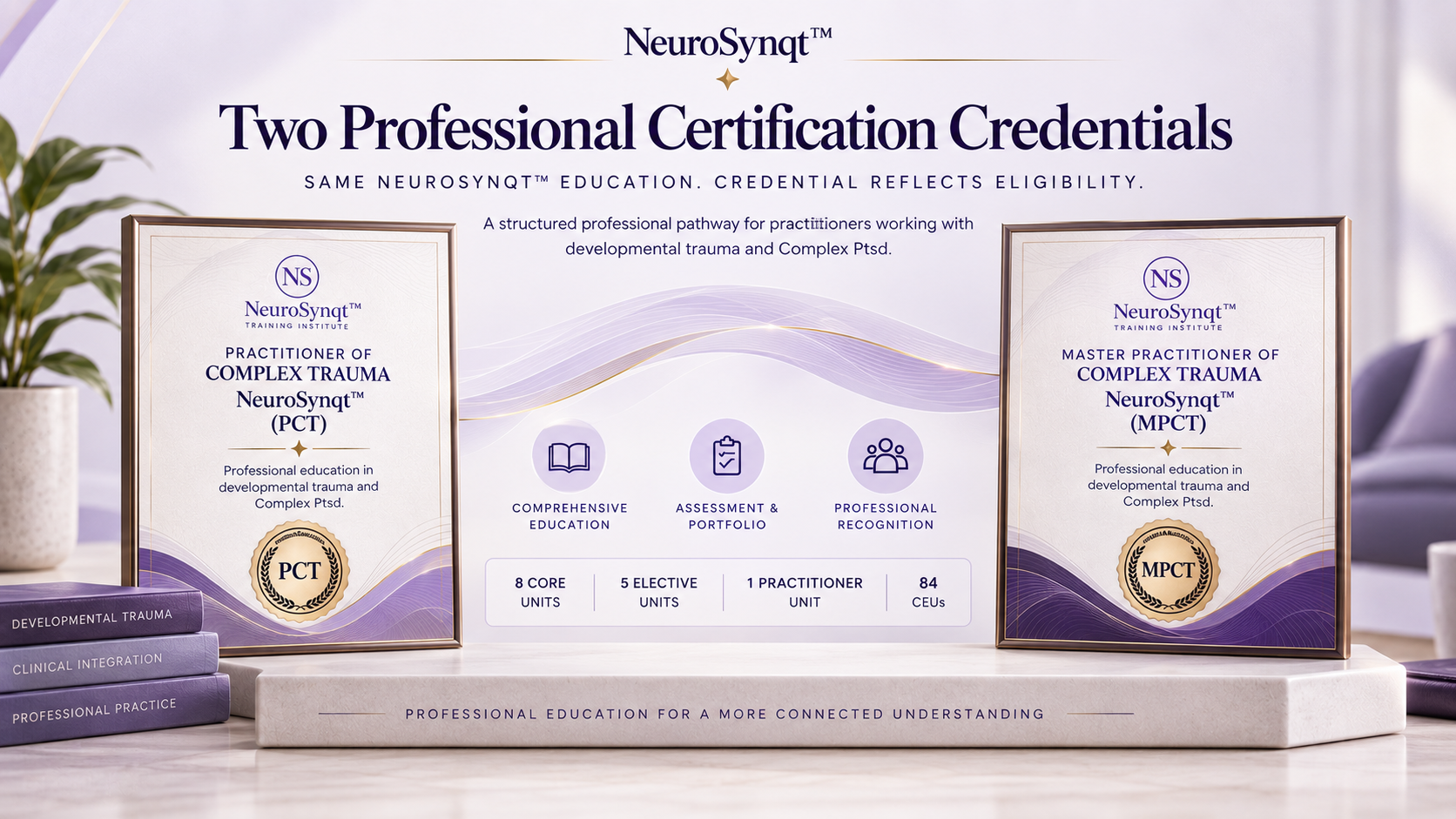
Practitioner of Complex Trauma – NeuroSynqt™ (PCT)
Awarded to eligible candidates who successfully complete the full
NeuroSynqt™ certification pathway but do not hold the prior professional or clinical qualification required for MPCT.
Certification requirements
- 8 Core units
- 5 Elective units
- 1 Practitioner unit
- required course assessments
- required portfolio activities
- 84 CEUs
Master Practitioner of Complex Trauma – NeuroSynqt™ (MPCT)
Awarded to eligible candidates who successfully complete the same NeuroSynqt™ certification pathway and also meet the recognised prior professional or clinical qualification requirements for MPCT.
Certification requirements
- 8 Core units
- 5 Elective units
- 1 Practitioner unit
- required course assessments
- required portfolio activities
- 84 CEUs
- recognised prior professional or clinical qualification foundation
Neither credential extends the practitioner's professional scope of practice.
Which Credential Applies to Me?
MPCT
Master Practitioner of Complex Trauma – NeuroSynqt™ is available to practitioners who complete the full certification requirements and hold an appropriate recognised professional or clinical qualification.
Recognised pathways may include relevant degrees, qualifying diplomas and other professional pathways where structured education, supervised client work and professional accountability can be demonstrated.
PCT
Practitioner of Complex Trauma – NeuroSynqt™ recognises practitioners and people in appropriate helping roles who complete the same NeuroSynqt™ education, assessment and portfolio requirements but do not meet the prior professional qualification foundation required for MPCT.
What This Education Adds to Existing Practice
Professional Education, Application and Resources
Each NeuroSynqt™ course is structured professional education designed to support understanding, professional application and integration within your existing role.
The NeuroSynqt™ Certification Pathway
What Does a NeuroSynqt™ Unit Include?
- 6 interconnected professional training courses
- 18 professional learning hours
- 6 CEUs
- Practitioner teaching and professional resources
- Applied learning and assessment requirements
- Professional Bridges
- NeuroSynqt™ Clinical Foundations
- NeuroSynqt™ Practitioner Centre
- Self paced study with lifetime access
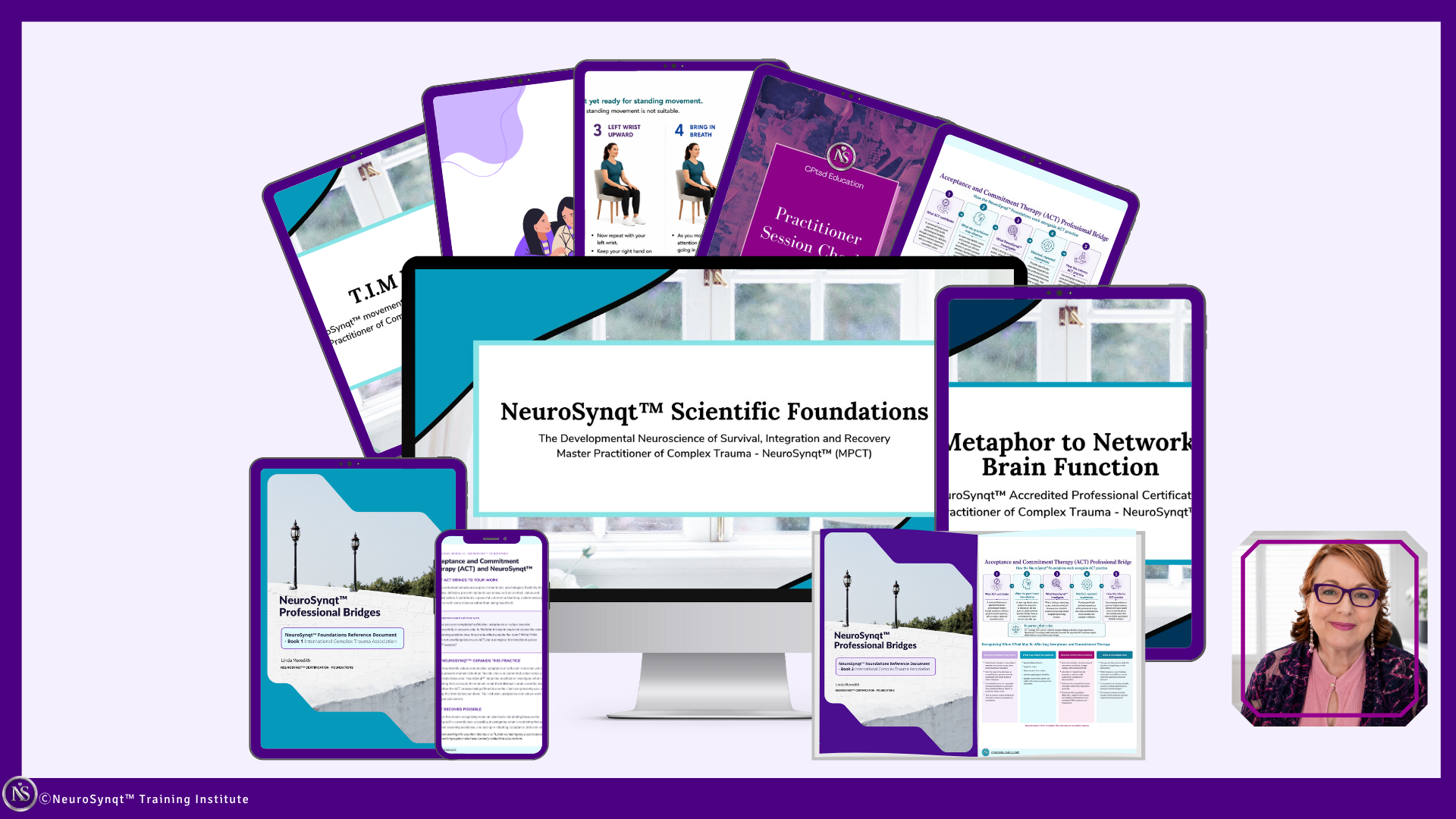
Developed by Linda Meredith
Clinical Complex Trauma Professional and Educator | Creator of NeuroSynqt™ | Brisbane, Australia
NeuroSynqt™ education is peer reviewed and delivered by a Registered Training Provider.
NeuroSynqt™ education is peer reviewed and delivered by a Registered Training Provider.
Choose How You Build Your Certification Pathway
You do not need to purchase the entire pathway before beginning.
INDIVIDUAL COURSE STUDY
Complete NeuroSynqt™ courses progressively according to your current professional learning needs.
Individual courses: US$240 each
Purchased courses include lifetime access.
CERTIFICATION BUNDLE
For practitioners already intending to pursue PCT or MPCT certification, the Certification Bundle provides a discounted way to access the wider pathway.
The current bundle includes 17 courses across Core, Elective and Practitioner learning, including currently released training and further units as they are progressively released.
Explore NeuroSynqt™ Professional Education
NeuroSynqt™ Core Courses
Build the connected professional foundation across developmental trauma and Complex Ptsd.
NeuroSynqt™ Elective Courses
Extend your learning into specialist areas relevant to your clients, professional interests and developing Complex Ptsd practice.
NeuroSynqt™ Practitioner Training
Extend NeuroSynqt™ learning into practitioner level professional application.
Your Professional Learning Continues Beyond the Course Page
The NeuroSynqt™ Practitioner Centre
Access is FREE with every course purchase.
Resources extend across:
Professional Practice
Client Support
Practitioner Resources
Certification & Continuing Learning
Global Business Support
Supervision Resources
Designed to Sit Alongside Existing Professional Practice
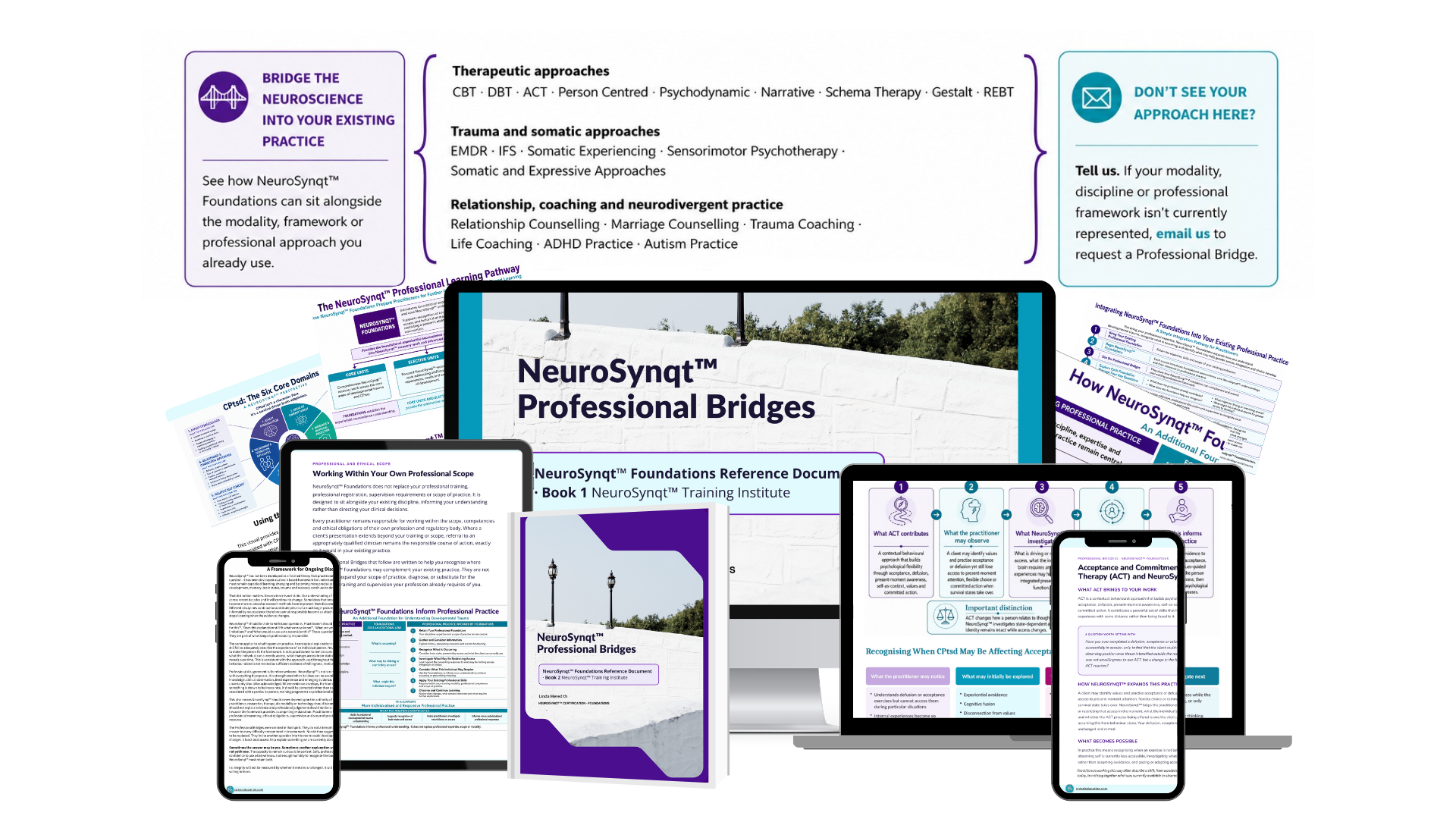
Professional Recognition Following Certification
On successful completion of PCT or MPCT certification, graduates receive professional recognition corresponding to the credential for which they are eligible.
This includes:
- PCT or MPCT certification
- a verifiable digital credential or badge
- PDF and PNG certification records
- eligibility for professional directory inclusion where applicable
-
the ability to accurately identify completed NeuroSynqt™ certification within professional information
Each digital credential includes a unique verification link, providing a clear way to communicate completed professional education to clients, employers, colleagues and professional organisations.
Global Accreditation
NeuroSynqt™ training is accredited through the International Institute for Complementary Therapists (IICT). NeuroSynqt™ training and courses have been peer reviewed at university level.
Supporting:
- professional recognition
- insurance eligibility
- global application across settings
Applicable across:
- clinical settings
- counselling and professional support settings
- coaching environments
- professional practice

Designed to Extend Knowledge, Not Professional Scope
NeuroSynqt™ is professional education in developmental trauma, Complex Ptsd and clinical integration. It is not a standalone therapy and does not train practitioners in trauma memory processing techniques.
Practitioners integrate NeuroSynqt™ learning within their existing professional role, qualifications, competence, insurance and jurisdictional requirements.
The NeuroSynqt™ Scope, Integration and Billing Guide provides additional guidance for practitioners considering how the education sits within their existing professional practice.
Certification FAQs
Is MPCT a Masters degree
What is the difference between PCT and MPCT
Do I need to pursue certification to take a NeuroSynqt™ course
Does completing an individual course make me PCT or MPCT certified
What does certification require
Do I need to complete everything at once
Does NeuroSynqt™ replace my existing modality
Does certification extend my professional scope
Is clinical supervision included
How is assessment completed
Build Your Complex Ptsd Specialisation One Course at a Time
You do not need to decide on the full certification pathway before beginning. Start with NeuroSynqt™ Foundations, choose a Core course aligned to your current practice, or begin with Elective learning for the adults you support.
If you intend to pursue PCT or MPCT certification, review the full pathway before selecting courses so your learning counts toward the required structure.
Professional education can begin with one course. Certification develops through the complete pathway.
Email admin@cptsdeducation.com