Linda Meredith is a Brisbane based CPtsd counsellor and complex trauma educator offering online CPtsd counselling for adults with developmental trauma through NeuroSynqt™, a brain based integration framework.

Online CPtsd Counselling with Linda Meredith

Brain based counselling for adults with CPtsd and developmental trauma

Linda Meredith provides online CPtsd counselling for adults affected by CPtsd and developmental trauma, especially where insight is present but responses such as shutdown, people pleasing, overwhelm, withdrawal or reactivity still take over under pressure.

Her work uses NeuroSynqt™, a brain based integration framework focused on real time brain state shifts, present day access, functional capacity and sustainable change rather than repeated trauma retelling.
Write your awesome label here.

Brisbane based. Online sessions available Australia wide and internationally.

Linda is based in Brisbane, Queensland, Australia. Sessions are delivered online, making support available to adults across Australia and internationally.

This work is for adults whose current functioning, relationships, decision making, emotional steadiness or sense of self have been shaped by early and prolonged developmental trauma.
Write your awesome label here.
Who this is for
This work may be suitable if you:
• have done therapy, personal work or self education but still feel stuck
• understand your patterns but cannot consistently shift them in real time
• experience shutdown, overwhelm, people pleasing, withdrawal or reactivity under pressure
• lose access to clear thinking, language, choice or self trust in certain situations
• feel like your brain keeps responding from old survival data even when present day life is different
• want support that works with the brain, not against it

The NeuroSynqt™ approach

NeuroSynqt™ is a brain based integration framework developed for CPtsd and developmental trauma.

Rather than focusing only on insight, symptom management or repeated discussion of the past, NeuroSynqt™ supports you to recognise what is happening in your brain in real time, understand why old responses take over and build the capacity to respond differently as integration increases.

The focus is not on forcing change through willpower. The focus is on helping your brain access, organise and apply change in the moments where survival patterns usually take over.

Ways to begin

You can begin in one of two ways:
Written Response
A focused written response for one specific situation, pattern or question. This is often useful when you need clarity before deciding whether 1:1 counselling is the right next step.
1:1 Counselling
Online CPtsd counselling with Linda, focused on tracking your brain-state shifts in real time, recognising survival responses as they occur and building sustainable change across daily life, relationships and functioning.

Quick facts

Based in: Brisbane, Queensland, Australia
Available: Online Australia-wide and internationally
For: Adults with CPtsd and developmental trauma
Approach: NeuroSynqt™, brain based, integration focused CPtsd counselling'
Options: Written response or 1:1 counselling
Focus: brain state shifts, abandonment, emotional neglect, people pleasing, dissociation, withdrawal, reactivity, attachment, relational pressure, functional capacity and sustainable integration
Availability: Online appointments are available according to Linda’s current schedule.
Fees: Session and written response fees are listed at the point of booking.
Referral suitability: Suitable for adult clients with CPtsd or developmental trauma who are stable enough for reflective online counselling and are not seeking crisis or emergency support.

This is not a crisis or emergency service. If immediate safety support is needed, contact local emergency services or a crisis support line.

When insight still does not create change

You may have already done the work. You may understand your patterns, your history and the reasons certain responses developed. And still, in real time, something takes over before you can choose differently.

This can look like:

• shutting down when you need to speak
• people pleasing before you realise you have agreed
• withdrawing when connection matters
• becoming overwhelmed by ordinary decisions
• losing language, clarity or confidence under pressure
• reacting from old survival patterns even when you know the present is different

This is not a motivation problem. It is not a lack of insight.
It is a sign that your brain is still organising present day experiences through earlier survival learning.


Write your awesome label here.

Developmental Trauma and CPtsd Recovery

This work supports adults who can often understand what is happening after the moment has passed, but lose access to clarity, language, choice or self-trust while the response is happening.

The focus is recognising the shift in real time and building the capacity to respond from present-day awareness rather than old survival learning.
Write your awesome label here.

What changes in real time

You can continue to function on the outside while your brain is working hard underneath.

When internal load builds, access to language, sequencing, perspective and choice can reduce. Familiar responses then begin to organise behaviour before you have had time to think it through.

The weight
Internal load builds faster than it can be integrated.

The moment
Access to present-day awareness reduces and automatic responses take over.

The pattern
Afterwards, you may understand what happened clearly - but in the moment, your brain was already protecting, predicting or responding from older learning.

Why previous help may not have become sustainable

Therapy, education and self understanding can be deeply valuable. They can give language, insight and a clearer understanding of why certain patterns developed.


But CPtsd responses do not always shift because you understand them.


When the brain shifts into survival based processing, access to what you know can reduce. This is why a person can speak clearly about a pattern afterwards, yet still be unable to interrupt it while it is happening.

 The gap

Knowing what to do does not always translate into access under pressure.

 The limitation

Cognitive understanding alone does not reliably override automatic brain based responses.

The focus of this work: To support sustainable change where the pattern actually occurs - in real time, under real internal pressure.
Write your awesome label here.
NeuroSynqt™ is not a quick fix model. The work focuses on supporting the integration of brain states shaped by developmental trauma, with the aim of reducing the ongoing impact of early experiences on daily life and functioning.
What is driving this

Your brain is driving this, not you

Throughout your day your brain shifts function IF it detects threat. Not because there is a genuine threat, but because during your childhood your brain became wired to detect threat in a variety of ways.

This happens at an automatic, unconscious level. When it does access to reflective thinking reduces and responses become automatic. Present day orientation can drop away and previously learned material becomes less accessible.

 What happens

Brain state shifts and access to thinking changes

 What it means

This is not about behaviour or effort. It reflects how the brain is functioning in that moment

RELIEF

A different focus

Change does not come from more insight alone. It requires recognising when state shifts occur and working with them directly in real time.

Applied brain based work in practice

This work does not rely on extended analysis or repeated discussion without change. It focuses on what is happening in the moment and how to respond in a way that supports integration.

Common experience
Understanding increases but access drops under pressure

What we do
Work with real time responses and support changes as they occur

What changes
Greater access to self in moments that previously led to shutdown or reactivity

What we skip

Endless analysis, circular talking, abstract concepts that make sense in theory and collapse under pressure.


What we do

Real situations, real reactions, real time shifts - and what to do differently while you're inside them, and what to do to prevent them reoccurring.

What changes

You stop losing yourself in the moments that matter. Not in retrospect - while it's happening.

kind words from clients

Some feedback 

Client feedback reflects the practical, structured and real-time nature of this work.

From Burnout to Business

When I met Linda, I had been in a state of disassociation and freeze from a huge burnout for many months, desperate and concerned that a broken me was going to be permanent. I felt very little hope for my future and a great deal of fear for the financial situation of my family.

Linda is brilliant when it comes to seeing the potential of something or someone. She can identify where a concept needs more information or breakdown or structure. She is incredibly knowledgeable about the healing process and has a way of normalizing overwhelm or distress.

A huge contrast from people who are not trauma trained; when they try to ‘comfort’ us, it can feel very much like gaslighting or repression. Linda helped jump start my healing process big time. Thank you Linda, for who you are and what you are doing for our world.
Sherry Yuan Hunter, MEd, CTRC

Real Results

Before connecting with you to start this journey of recovery, I was not able to identify patterns of behavior that triggered my CPtsd A year before that I had never heard of CPtsd .

 I am now at a place where even when I was going through a significant mood swing, I was able to see the behavior clearly and deal with it in a productive manner. I have you to thank for that because without you helping me stick to a plan I think I would be in the same place I was before, which is reacting from trauma. I certainly never saw such changes during any of the work I did in therapy
K.E. Nevada, USA

Life Changing

After 30 years in therapy time I've spent working with Linda have been the most valuable of my life. Not only did we form a trusting relationship, but she has helped and continues to help me slowly understand the real impact of my childhood.

I now feel equipped to do things differently. It's been the most liberating and empowering experience and I've learned things that will stay with me forever. Thank you Linda! 
Lisa A.

Is working with Linda your one next step?

Working with Linda is for you if

You have engaged in therapy or personal work and already understand yourself, yet the same responses continue to take over in real time. In moments of relationship strain, conflict or pressure, your brain shifts state and you lose access to yourself. You may shut down, overreact, people please or withdraw, and find you cannot interrupt the pattern even when you see it coming.

You are not necessarily at breaking point, however you recognise that what you have tried so far is not fully working. From the outside you are functioning, yet underneath there is ongoing strain and you are looking for practical change that holds in real time rather than continued analysis without consistent results.

You are looking to understand what is happening as it occurs and to respond differently in a way that is sustainable over time.

This is not for you if

This work requires a level of readiness and willingness to engage with change as it is happening. It can be demanding and it often requires sustained attention. For many people, it also takes considerable courage to begin.

If you need or are seeking immediate crisis support, you are not in a position to engage with reflective work at this stage or you are not ready to look at or to work with internal responses as they occur working with Linda 1:1 is not for you at this stage of your recovery.

If now is not the right time, there are other ways to stay connected to the work. You can access the YouTube channel, join the Facebook group or use the Thriver Library to build understanding at your own pace.


This service is not a crisis service. If immediate support is required, contact emergency or local crisis services.

Start

Two ways to begin

You can start with a focused written response on one situation, or move directly into one to one counselling.

Write your awesome label here.

Most people start here

Written response for one situation

You bring one situation, one struggle that isn't resolved. Linda maps what's actually driving it - and designs a worksheet you can use at your own pace.


One time · Flexibility · No ongoing commitment

Begin with a Written Response  
Write your awesome label here.

1:1 Counselling

Track your shifts in real time together

If you're ready to go further. We track your brain shifts as they occur, interrupt automatic responses, and build sustainable change that holds across situations.

Online · Flexible frequency · No lock-in

Book A Session  

NDIS clients and CPtsd recovery

This service is available for self managed, agency managed and plan managed NDIS participants seeking support for CPtsd related challenges.

Work focuses on increasing functional capacity, including emotional regulation, decision making, relational engagement and daily living stability.

Sessions are aligned with NDIS goals where applicable and can support:

  • Improved capacity to manage internal states
  • Increased consistency in daily functioning
  • Greater ability to engage in relationships and environments
  • Reduced reliance on survival based responses


Write your awesome label here.
NDIS clients are supported Australia wide through online sessions.
NDIS rates apply in accordance with current guidelines.
Sessions are billed under 15_043_0128_1_3 Assessment Recommendation Therapy – Counsellor 
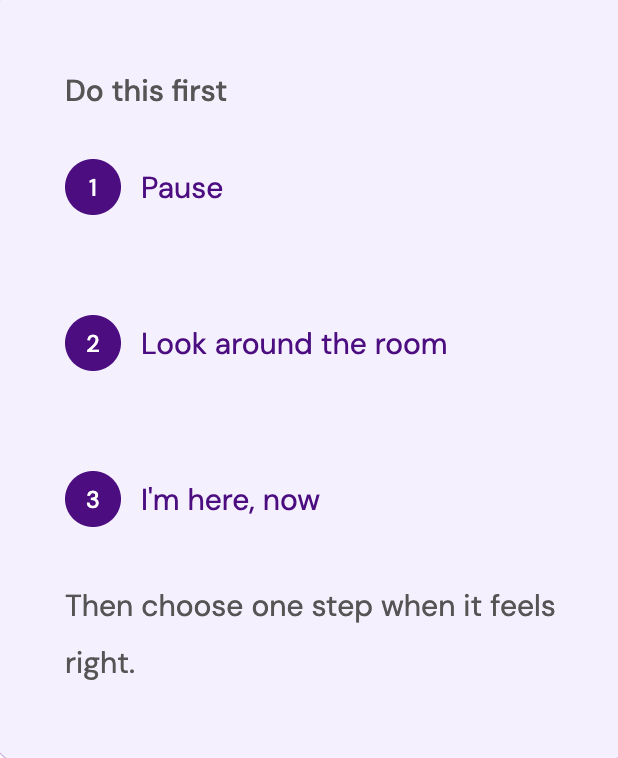
Pause

If this feels like too much right now

That response is understandable. Recognising this material can activate the same patterns being described.

You can pause, orient to your surroundings and return when ready.
Questions

What you need to know before you start

Do I need a diagnosis of CPtsd to work with you?

No. You do not need a formal diagnosis to begin counselling.

Many adults live with the impacts of developmental or childhood trauma without having language for it. If you recognise patterns such as long term overwhelm, shutdown, emotional flooding, relationship difficulties, or feeling stuck despite insight, this work may still be relevant. We focus on what is happening for you now, not on labels.

How is this Different from the Therapy I've already done?

Most therapy teaches what to do. This teaches what happens when your brain overrides you. We work with real situations in real time, not abstract concepts or your past.

What if I already understand my patterns?

Understanding isn't the problem. Your brain still switches state when it matters. We work with what happens in that moment, not with more insight.

Do you take international clients?

Yes. 1:1 counselling and written response are delivered online and available internationally. Session times are scheduled in Brisbane, Queensland, Australia time zone

Do you work online?

Yes. Sessions are available globally via secure online platforms.

Is this short term or long term counselling?

There is no fixed timeline. Some people come for short term support to stabilise or orient. Others engage over a longer period at a slower pace. There are no lock in commitments. You decide what feels manageable.  Some attend weekly for a period, others fortnightly or as needed. Pace is reviewed collaboratively.

What if I feel overwhelmed reading this?

That's your brain reacting — which is exactly what we're talking about. Start small. A written response is low pressure and gives you a clear answer. You don't need to figure everything out today.

What if I've tried everything and nothing has worked?

You're exactly who this is for. Most people I work with are intelligent, self aware and completely stuck in the same cycles - not because they're doing it wrong, but because something underneath hasn't been addressed properly yet.

Should I start with a written response or book a session?
Are you a registered psychologist or therapist?'

Linda is a qualified Clinical CPtsd Counsellor, Complex Trauma Educator and the developer of NeuroSynqt™, the brain based integration framework taught through the NeuroSynqt™ Training Institute. She is a registered training provider accredited through the International Institute for Complementary Therapists (IICT), with NeuroSynqt™ peer reviewed at university level.

NeuroSynqt™ addresses CPtsd as a neuroscience integration injury, which is not currently taught in standard psychology or counselling degrees. Linda's 1:1 work is suited to adults with CPtsd or developmental trauma who want focused, brain based integration work that sits outside the symptom management and regulation focused models offered in mainstream training.
What if nothing has worked before?

You're exactly who this is for

Most people I work with are intelligent, self-aware, and completely stuck in the same cycles — not because they're doing it wrong, but because something underneath hasn't been addressed properly yet.

People come here after years of trying, not feeling understood, starting things and stopping. That doesn't mean this won't work.
Your brain has learned to protect you from more disappointment. 
That's something we work with - not against. 
This approach is built for people who've tried and felt stuck.
Start

If your life feels like 'same thing, different day'

That's not because you're not trying hard enough.
It's because something in your brain has not been addressed properly yet.

Safety note

This service is not a crisis or emergency service.

If you are in immediate danger or need urgent support, local emergency services or crisis support lines are the most appropriate place to turn.

Booking

If you are looking for counselling that:

  • Respects the complexity of CPtsd

  • Works with the brain, not against it

  • Prioritises safety, capacity and integration

You can begin with a written response or book an online 1:1 counselling session as per Linda's availability on the booking scheduler

Supporting integration that addresses intergenerational trauma at its source

By addressing developmental trauma at the level of organisation, NeuroSynqt™ supports:

  • more stable identity across contexts
  • improved relational capacity
  • consistent behavioural change
  • reduced reliance on coping cycles

This is where recovery becomes sustainable - not cyclical.


Stay connected:
Follow us on social media using the links below and sign up for our newsletter to receive special offers and updates on new content.
Created with