Do I Stay, Do I Go or Do I Grow?
You keep asking if he is really changing or am I still hoping?
Your brain keeps trying to make sense of something that doesn't make sense.
_____________________________________________________________________________________________________________________
You Already Know This Place
You already know the loop. One part of you sees the pattern. Another part remembers the good moments. A different part wants to believe the apology. Another part is exhausted from waiting. A part of you feels guilty for even questioning it. A part of you wonders if you're being unfair.
And somewhere underneath all of that, a part of you already knows something is costing you too much.
Then the thinking starts.
Maybe this time is different. Maybe he just needs more time. Maybe I am expecting too much. Maybe I should stay. Maybe I should leave. Maybe I will regret it.
You replay conversations. You re-read the apology, the tone, the mood shift, the promise. You try to work out whether what you saw was real, or whether you imagined it, or whether you are being too harsh, or not harsh enough.
And the longer it goes on, the harder it gets to trust your own observations.
This is where hope gets confusing. Hope matters. Hope keeps you open, compassionate and willing to notice real growth when it happens. But hope cannot tell you whether change is actually occurring. Evidence can.
If you suspect narcissistic abuse, coercive control or a long pattern of emotional manipulation, the hope cycle becomes harder to read. The good moments feel more vivid. The apologies sound more convincing. The guilt for questioning him sits heavier.
This evidence based course does not diagnose him. It helps you track what is actually happening over time, across mood shifts, promises and repair attempts, so you can see whether you are watching real change or the same loop wearing a new face.
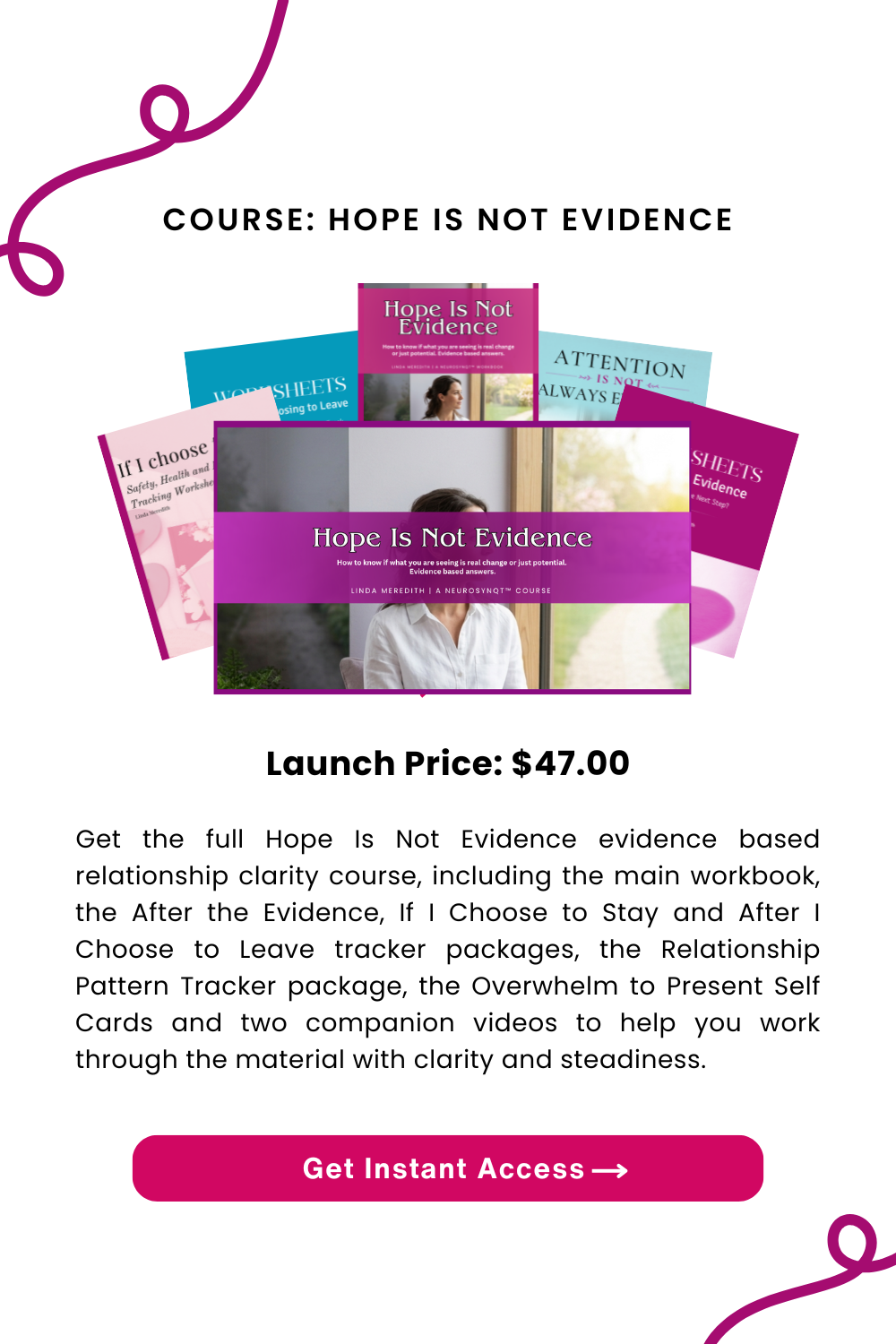
Course: Hope is Not Evidence
What's Included:
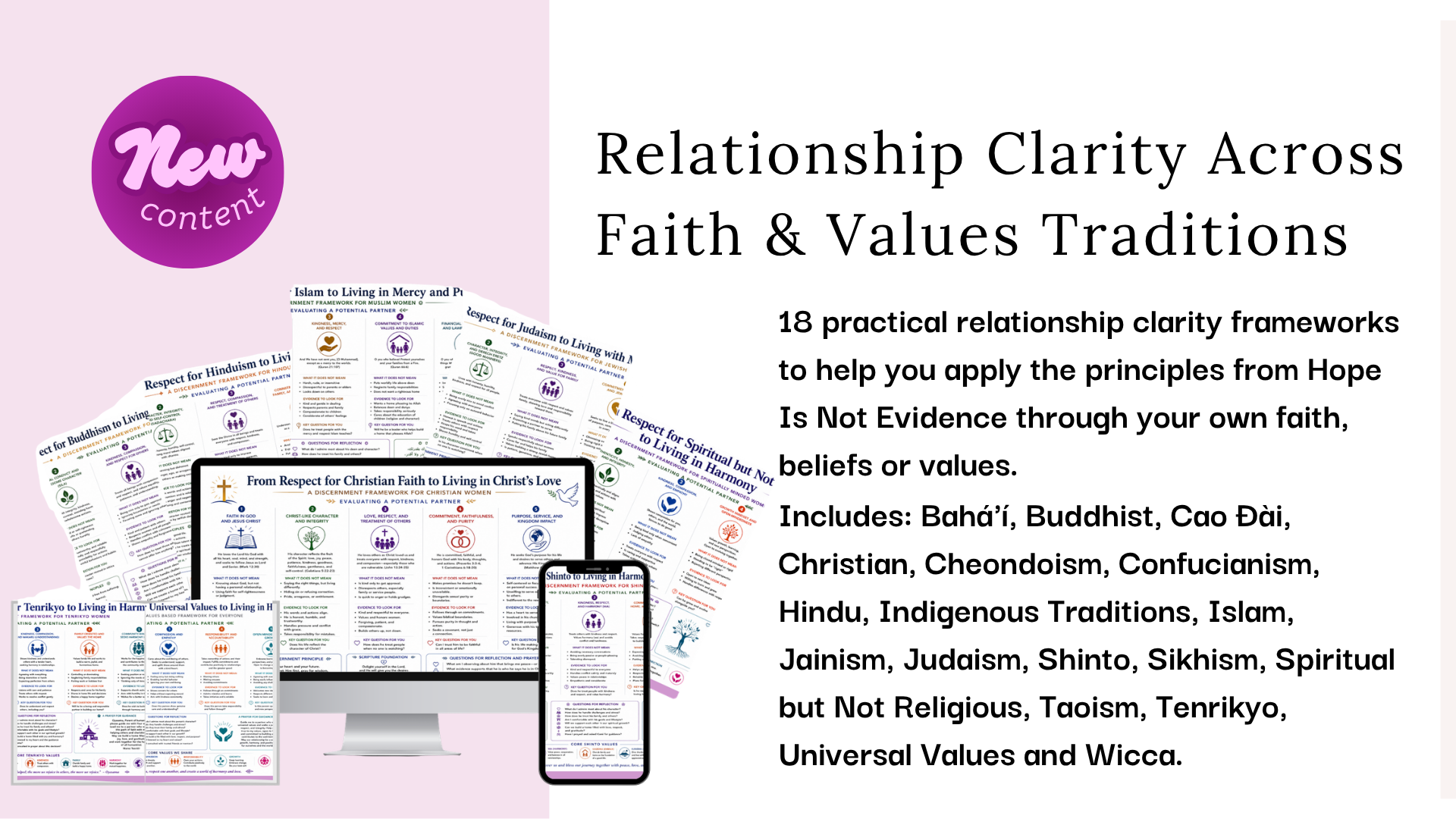
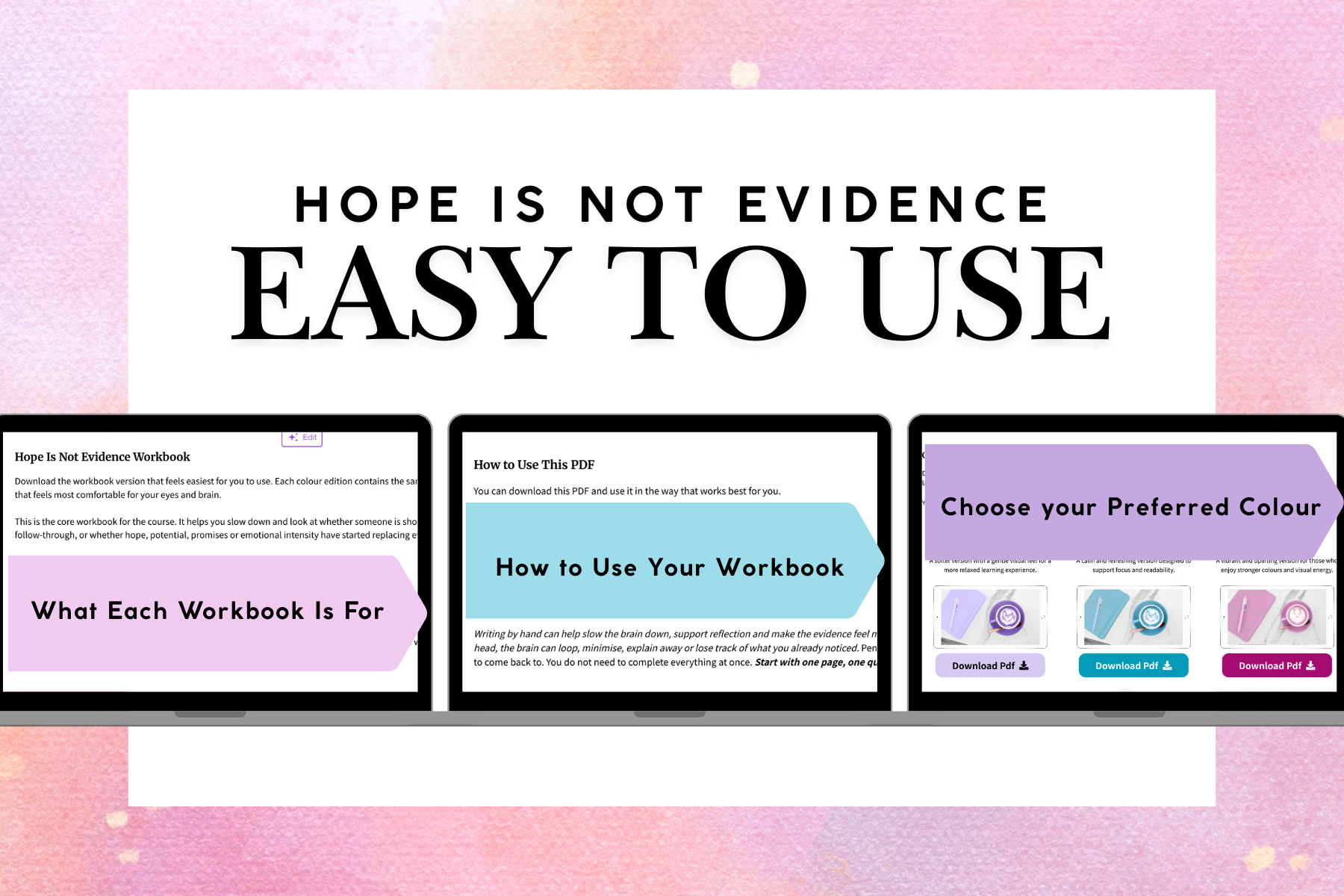
💜 Hope Is Not Evidence Workbook
💜 Attention Is Not Always Evidence Workbook
💜 If I Choose to Stay

💜 After the Evidence Worksheet Pack
💜 Relationship Clarity Workbook
💜 If I Choose to Leave

The Goal
Hope matters.
But hope is not evidence.
Evidence can restore Hope.
And you deserve to make decisions from what is real.
Get Clarity - Hope Is Not Evidence - Available Today
a Note from Linda
The deep need for Hope Is Not Evidence came from three places.
From walking beside close girlfriends through the “do I stay, do I go, do I wait and see” question. Watching the pain of being caught in that loop, believing in potential and not being able to step out of it, even when the cost increased the longer they remained.
From clients who needed real answers. Not affirmations. Not someone telling them what to do. They needed a way to find their own answers, in their own time, because one of the quiet truths of being an adult with CPtsd is that many of us never had a solid foundation for making the decisions that shape our health, our finances, our children and our relationships over time.
From my own life. Years of giving everything I had to relationships and still being left with questions. Why was giving everything not enough? Why did I kept choosing the same kind of man, and sometimes a harder version than the one before?
I have watched too many women, with or without recognised CPtsd, lose months and sometimes years inside this exact loop. I have watched health decline critically. I have watched finances, investment properties, families and friendships fall apart and have to be rebuilt from the ground up.
I have been through it myself. The endless hoping. Watching. Analysing. Questioning. The what ifs.
When your brain has an integration injury, the difference between hope and evidence does not sit cleanly. The part of you that sees the pattern and the part of you that wants to believe the apology are often working from different timelines, with different access to the present moment.
This is not a personality flaw. It is how an integration injured brain holds a relationship it cares about. You do not need more insight. You need a structure that lets you see what is actually in front of you without losing yourself in the process.
That is what this course gives you.
Linda Meredith CPtsd Educator and Counsellor
NeuroSynqt™ Developer | Registered Training Provider
Course Material:
Frequently asked questions
Where do I access the course?
Do I get instant access?
How long do I have access?
Is this a live course?
Do I need to complete everything?
Is this only for romantic relationships?
Is this therapy?
What if I am unsafe?
Can professionals use this with clients?
Will I receive a certificate?
Still asking whether it is change or potential?
Start the course and track what is actually being shown.
Developed by Linda Meredith

Supporting integration where recovery becomes sustainable - not cyclical.