
When Faith Language Silences Trauma Survivors

Dec 29 / Linda Meredith

When Faith Language Silences Trauma Survivors

A reflective exploration of dissociation, belief and compassion

Recently, I read a post that described dissociation as a gift from God.

I found myself deeply unsettled - not because of the author’s faith and not because of their intention, which I believe was sincere - but because of how easily that framing can silence trauma survivors, particularly survivors of childhood sexual abuse.

For many CSA survivors, finding a voice as an adult is already incredibly hard. When survival responses are spiritualised too quickly, the message - often unintended - becomes: endure quietly, be grateful, don’t question, don’t name harm too clearly.

Let me be clear upfront: Zero shade to the original author.  I respect faith deeply. I have walked my own spiritual path for many years. And I don’t believe in “I’m right, you’re wrong,” or “I’m in, you’re out.”

Having grown up in a multi-generational family marked by division, and with no early attachment to organised religion, my spiritual journey taught me something foundational: Faith grows through questions, not certainty. And belief is personal, experiential and always unfolding.


I often ask myself a simple but powerful question:
Does what I believe improve my life trajectory - or does it quietly impede it?

That question has shaped my journey in quiet but significant ways. It has given me permission to keep seeking answers that feel not only meaningful, but also supportive of real healing and growth.

A line often attributed to Ram Dass says, ‘We’re all just walking each other home.’ That resonates deeply for me. We are human beings walking alongside one another, and when we do so with gentleness, compassion, and humility, we can remain connected even when our beliefs differ.

Recently, a client of mine in London, from an Asian background and carrying intergenerational trauma within a different faith tradition, said mid-session, ‘You never judge anyone.’ I was genuinely surprised and quietly moved. Another client in the United States shared something similar: ‘I can always tell you what’s happening, no matter what I do.’

For me, that’s the ground we’re aiming for - in healing, in faith, and in relationship. Open hearts. Safety. And a deep respect for each other’s journeys.

When Faith Language Becomes Spiritual Bypassing

Spiritual bypassing occurs when spiritual or religious language is used - consciously or unconsciously - to avoid, minimise, or prematurely resolve emotional pain, trauma, or injustice. It often sounds compassionate, but it has a silencing effect.

Some common examples include:

  • “God doesn’t give us more than we can handle.”

  • “It happened for a reason.”

  • “Your suffering made you stronger.”

  • “This was a gift in disguise.”

  • “Just trust God and move on.”

For trauma survivors, especially those harmed as children, this language can:

  • Shift responsibility away from perpetrators

  • Pressure survivors into gratitude instead of grief

  • Invalidate the depth of harm

  • Reinforce silence learned in childhood

Spiritual bypassing doesn’t come from malice. It usually comes from discomfort with pain.

But discomfort avoided is pain transferred - often back onto the survivor.

Dissociation: What Changes When We Understand the Brain?

When we understand dissociation through neuroscience, something important happens.

Dissociation stops being framed as:

  • A moral achievement

  • A spiritual virtue

  • A gift bestowed upon suffering

And becomes recognised as:

  • A protective brain response

  • An automatic survival mechanism

  • Something that occurs without conscious choice, especially in children

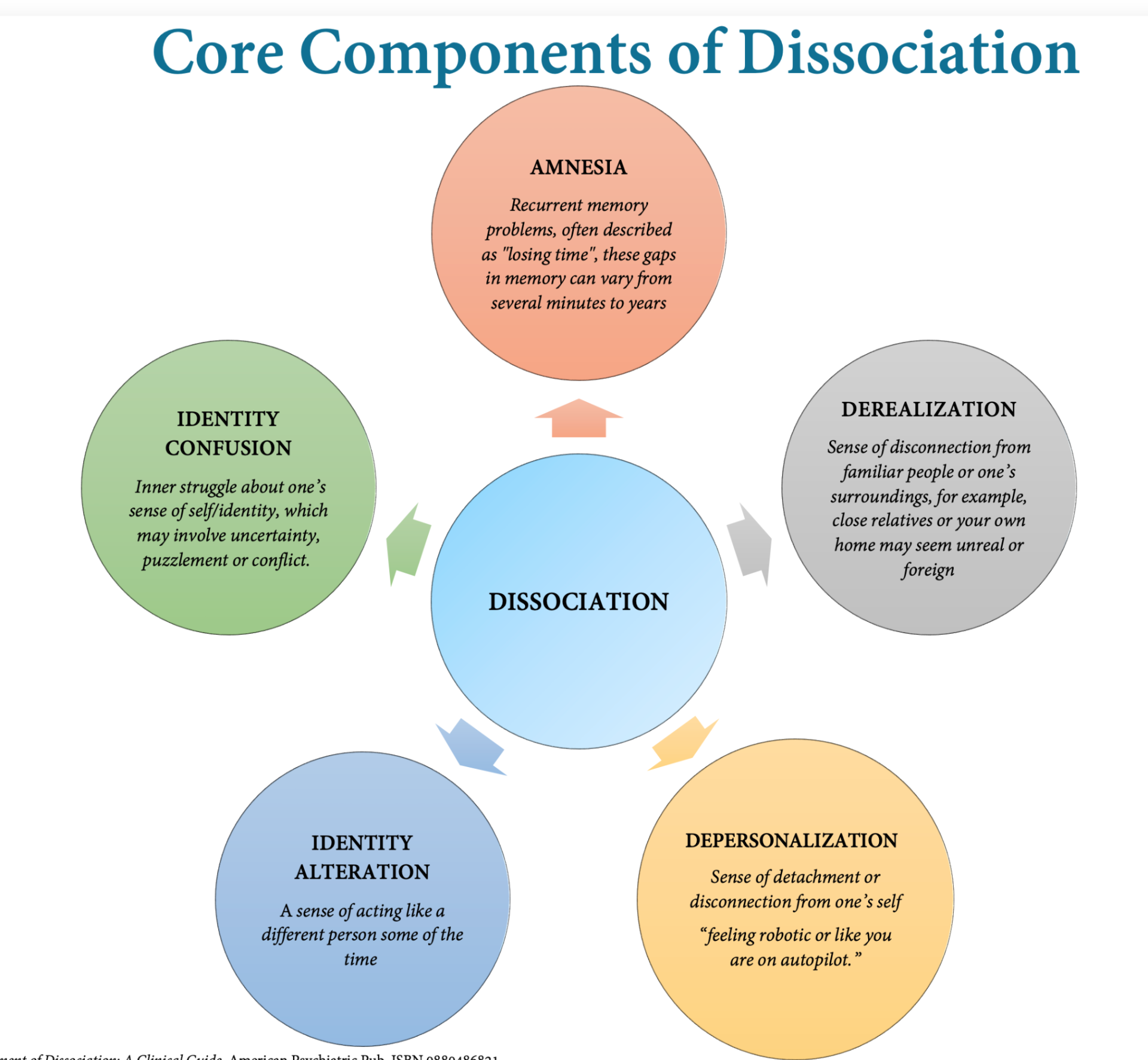
Dissociation can show up as:

  • Emotional numbness

  • Feeling detached from the body

  • Memory gaps

  • Feeling unreal or disconnected from reality

  • Going blank under stress

  • Losing time

  • Feeling “not here” during conflict

  • Functioning externally while feeling absent internally

For children who cannot escape abuse, the brain does what the child cannot. That is not holiness. That is survival.

I can understand why someone might say dissociation is a “gift from God” in the sense that human beings were designed with the capacity to survive overwhelming threat. In that sense, yes - we are wisely made.

But the language matters.

When dissociation is framed as a gift from God, rather than a response within the brain, it risks becoming spiritual bypassing for many people across the world. Especially for those still trying to find their voice.

When Belief Meets Lived Experience: Questions for Reflection

1. When We Call Survival a “Gift,” What Are We Really Saying?

Many survivors describe dissociation as the way they survived overwhelming harm.
  • It was not chosen.
  • It was not learned.
  • It happened.

Some faith narratives describe this as a “gift from God.”

Before accepting or rejecting that idea, it can help to pause and ask:

  • When I call a survival response a “gift,” does that bring me peace – or pressure?

  • Does this language help me grieve what was lost, or move me past grief too quickly?

  • If a child had not needed this response, would anything truly have been missing?

Across faiths, compassion is never meant to erase harm. It is meant to name reality honestly, then walk forward with care.


2. Does My Faith Make Space for Harm to Be Named Clearly?

One of the most difficult tensions for survivors is this:

  • Faith often seeks meaning.
  • Trauma demands truth.

Both matter.

Questions worth sitting with:

  • Am I allowed, within my faith, to say: “What happened to me was wrong” – without softening it?

  • Do I feel pressure to frame suffering as purposeful in order to belong spiritually?

  • If harm is explained too quickly, who carries the cost of that explanation – God, or the survivor?

Across traditions, moral responsibility sits with human choice, not with children who endured what should never have happened.


3. When Faith Language Comforts Others but Silences Me, What Do I Do?

Many survivors learn early that silence keeps the peace.

Faith communities sometimes unintentionally reinforce this by rewarding acceptance, gratitude, or “positive framing” over honesty.

Reflect gently:

  • Have I ever stayed quiet to avoid making others uncomfortable with my story?

  • Do certain phrases shut me down rather than open me up?

  • Does my faith allow lament, protest, and unanswered questions – or only resolution?

A faith that cannot hold pain without rushing to meaning may still be growing.

That doesn’t make it bad.
It makes it unfinished.


4. What If My Faith Journey Is Experiential, Not Doctrinal?

For many survivors, faith does not change through arguments or teaching alone.
It changes through lived integration – slowly, relationally, over time.

You might ask:

  • Does what I believe help me move forward in life, relationships, and self-trust?

  • Am I allowed to test beliefs by their fruit, not just their intent?

  • What is one small shift in language, posture, or belief that feels more honest right now?

Faith does not have to be discarded to be refined.

Sometimes the most faithful act is saying,
“This belief helped me survive once – and now I’m ready for something truer.”

Extra Questions for Reflection: Faith, Survival and Healing

Rather than arguing theology, I believe questions are a gentler and more faithful path forward.

You might reflect on some of these, slowly, in your own time.


1. About Belief and Impact

  • Does this belief help me feel safer, freer, and more whole?

  • Or does it make me feel smaller, quieter, or pressured to be grateful?

2. About Harm and Responsibility

  • Am I able to name what happened to me as wrong without softening it?

  • Does my faith allow space for grief, anger, and protest?

3. About Survival

  • When I look back at how I survived, do I feel compassion for myself?

  • Or do I feel pressure to spiritualise what I endured?

4. About Healing

  • Am I allowed to grow beyond beliefs that once helped me survive?

  • What would faith look like if it walked with my healing instead of ahead of it?

5. About Voice

  • Do I feel safe to speak honestly about my inner world?

  • If not, what messages taught me silence was safer?

Faith journeys are not static. They are experiential. They mature as we do.

Moving Forward Safely

If these questions stir anything in you, you don’t have to carry them alone.

This kind of reflection is best explored in safe, supportive environments - with a CPtsd-trained practitioner, counsellor or coach who understands trauma and respects your faith background.


Together, these questions can be:

  • Gently unpacked

  • Explored without pressure

  • Integrated into your healing at your pace

You are allowed to honour survival without sanctifying what caused it.

You are allowed to grow in faith without silencing your story.

And you are allowed to walk your path with honesty, dignity and compassion.

Are you Looking to Take the Next Step?

Living with CPtsd?
What if recovery meant no longer remaining in survival mode?

I spent years chasing answers to a constant felt sense that something was “wrong” with me. On the outside I appeared functional - wife, mum, business owner. Inside, I was cycling through crippling anxiety and depression with no clear pattern.

Each time I sought help, I was told, variations of “You’re doing better than 98% of my clients - you’ll be fine.” The truth? Most clinicians/practitioners weren’t trained in complex/developmental trauma, making it impossible for them to see how CPtsd was impacting my life and eroding my capacity.

The basics I needed weren’t happening - and my health challenges increased every year.
Write your awesome label here.


Linda's Qualifications include:

Clinical Complex Trauma Professional LvL 2 (Janina Fisher)

Certified Trauma Recovery Coach Supervisor
Dip Couns
CPtsd recovery is a shared walk, not a solo test of willpower.
With the right support, language, tools and Trauma Brain Mapping old survival patterns can settle. Experience less pressure, more progress and kind accountability so your effort finally lands as change you experience in your daily life. Personal freedom starts here.
If you’re ready for practical, brain-based support that treats the whole self, CPtsd Recovery Counselling with Linda could be your next step.
Write your awesome label here.

CPtsd Courses & Certification

✨ Whether you’re a professional, a survivor, or someone supporting a loved one, our CPtsd courses are designed for everyone. Explore practical, neuroscience-based tools and compassionate guidance you can use right away.
Follow us on social

Developmental Trauma/CPtsd Courses

How patterns get passed on - and how they change

Intergenerational trauma does not continue because people fail.
It continues when survival adaptations formed in childhood are never recognised, named, or integrated.

When these adaptations remain unseen, they can quietly shape relationships, parenting, health, and identity across adulthood.
Not through intent, through repetition.

Change does not require responsibility for the past or pressure to protect the future.
It begins when existing patterns are understood in the present.

Understanding creates choice.
Choice allows patterns to change.

Self-paced tools designed to support recovery without overwhelm.

Join our newsletter

Sign up for our newsletter—a valuable digest of the latest Complex Trauma Recovery insights, news, and opportunities.

Simply enter your name & email address to subscribe.
You can easily update your preferences or unsubscribe anytime.
Thank you!
Empty space, drag to resize
Created with