Newsletter January, 2026

What I’m hearing from returning practitioners
Over the last few weeks, I’ve had a steady stream of therapists, counsellors, mental health practitioners and coaches say some version of this:
‘I need my clarity back.’
- Not motivation.
- Not another modality.
- Not a pep talk.
Clarity.
And honestly? That makes perfect sense.
When you work with adults who carry developmental trauma, your clinical lens takes a hit over time if it’s not regularly recalibrated. Complex relational dynamics do that. They blur edges. They quietly erode confidence. They make good practitioners second guess themselves.
That’s not a personal failing.
That’s the cost of working at depth.
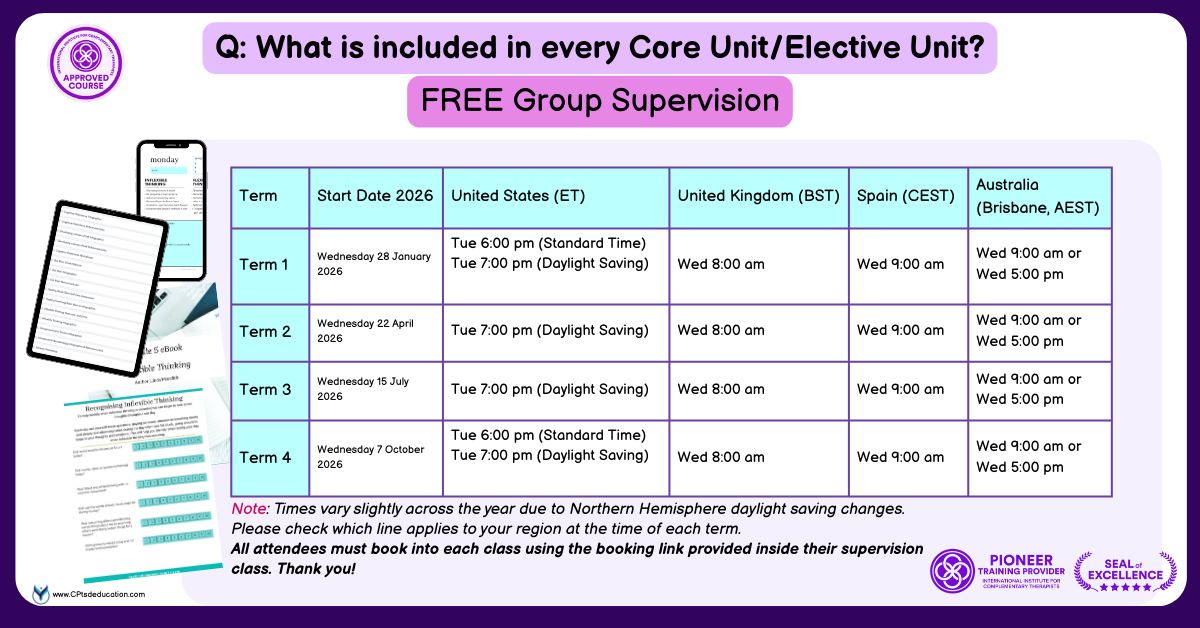
Why this supervision cycle matters
Over the last few weeks, I’ve had a steady stream of therapists, counsellors, mental health practitioners and coaches say some version of this:
‘I need my clarity back.’
- Not motivation.
- Not another modality.
- Not a pep talk.
Clarity.
And honestly? That makes perfect sense.
When you work with adults who carry developmental trauma, your clinical lens takes a hit over time if it’s not regularly recalibrated. Complex relational dynamics do that. They blur edges. They quietly erode confidence.
They make good practitioners second guess themselves.
That’s not a personal failing. That’s the cost of working at depth.
Why this supervision cycle matters
Our practitioners are already ahead of the curve. They’re actively working toward integrating NeuroSynqt™ into their practice, which means they’re not just collecting techniques - they’re reshaping how they see clients.
NeuroSynqt™ leads with:
-
🧠 A brain-based understanding of developmental trauma
-
🔄 Experiential practices, not insight-only interventions
-
🧩 A focus on integration, not symptom management
That kind of work demands a steady, grounded clinical frame. Supervision is where that frame gets restored.
Session 1: Gentle Re-engagement for Returning Practitioners
We’re starting exactly where people are.
This first session is not about performance or productivity.
It’s about:
-
Recalibrating your clinical lens
-
Reducing internal noise and second-guessing
-
Restoring confidence when working with complex relational patterns
-
Re-entering the work without overwhelm or self-criticism
Too many supervision spaces push practitioners to rev up when what their brain actually needs is to reorient first. Gentle reengagement is not a soft option - it’s a smart one. 🧠
An open invitation
Supervision starts this week, and this first session is designed to do exactly what many of you have asked for - restore clarity and clinical confidence.
If you’ve stepped back, felt foggy or noticed your confidence wobble when it shouldn’t have, you’re very welcome to join us.
- No rushing.
- No catching up.
- Just a clean, grounded re-entry into work that matters.
Sometimes the most professional thing you can do is pause long enough to see clearly again.

THRIVER LIBRARY
Skills. Practice. Confidence. Progress.
A practical library designed to build capacity one doable step at a time.
The Thriver Library is our growing collection of practical tools, worksheets, and guides designed to make CPtsd recovery easier in everyday life. No overwhelm. No academic jargon. Just brain-based resources you can use immediately to gain clarity, reduce crashes, and build steadier foundations step by step.
Whether you’re learning for yourself or supporting others, the Library helps you turn insight into integration – one doable action at a time.
Living with CPtsd?
What if recovery meant no longer remaining in survival mode?
What if recovery meant no longer remaining in survival mode?
With the right support, language, tools and Trauma Brain Mapping old survival patterns can settle. Experience less pressure, more progress and kind accountability so your effort finally lands as change you experience in your daily life. Personal freedom starts here.
Work directly with Linda
Find a practitioner near you


CPtsd Courses & Certification
CPtsd Recovery & Practitioner Training
Self-paced | Professional training | For practitioners and professionals
Breaking cycles doesn’t start with fixing the future.

Join our newsletter
Simply enter your name & email address to subscribe.
You can easily update your preferences or unsubscribe anytime.