The question he asked was confronting in its honesty:
‘Why should I want to live rather than kill myself?’
This is not a video about motivation, positive thinkin, or finding purpose.
It is about what happens when a person grows up needing to survive before they ever had the chance to develop a stable sense of identity, meaning or agency.
Many survivors of childhood sexual abuse live with long-term impacts such as:
-
difficulties with trust and intimacy
-
shame and self-blame
-
memory gaps
-
body-based reactions they did not choose
-
emotional numbness or emotional overwhelm
-
confusion about who they are
-
feeling stuck or caught in repeating patterns
These experiences are not random.
They are consistent with developmental trauma that was never properly named, supported, or integrated.
In the video, I talk about why this question is not actually about wanting to die. I explain how dissociation affects decision making, how the survival brain can keep running long after the danger has passed, and why hope does not come first – capacity does.
This is especially important for male survivors, who are often taught, directly or indirectly, that they should not be affected, should have stopped it, or should be ‘over it’ by now.
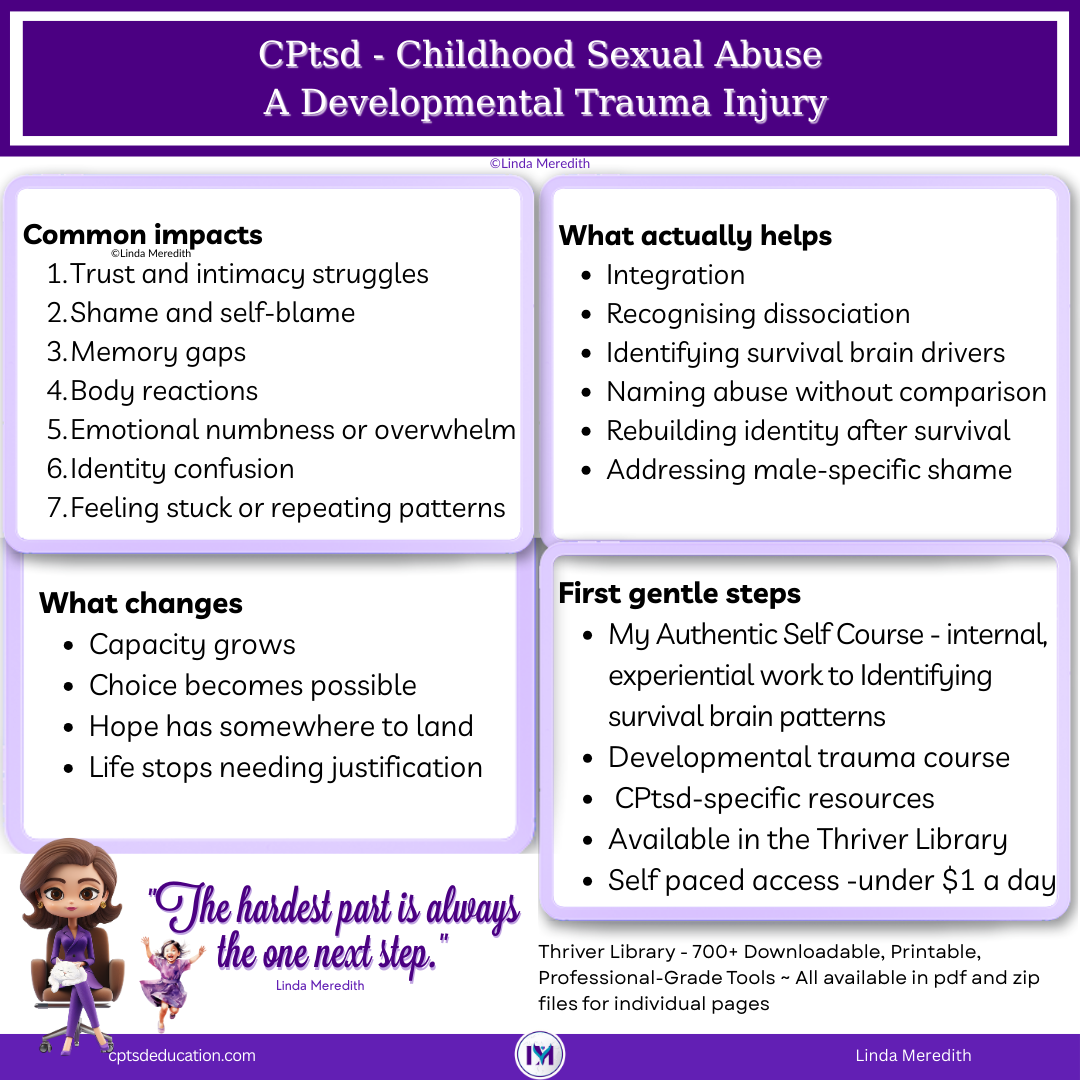
If this question resonates with you, there are gentle, self-paced options available.
My Authentic Self (MAS) is a structured, experiential process that helps people recognise when their brain is in survival mode and driving their internal responses. Learning to identify the different layers created by survival mode supports important life decisions being made from a more integrated place rather than from a dissociative or reactive state.
MAS offers a reliable structure for engaging with internal experience in everyday life, allowing people to recognise what their brain is driving over time without pressure to analyse or change. Because the process is experiential, it meets each person where they are in their individual CPtsd recovery and can be returned to again and again, providing steadiness and continuity across different stages of recovery.
MAS supports clearer decision making and greater alignment between internal experience and present-day choice. The focus is not on fixing the self but on offering a dependable internal framework that supports identity restoration and recovery goals.
This content is educational and not a crisis service.If you are in immediate danger, please seek local emergency or crisis support.
Silence allows shame to survive.Understanding creates a way forward.
THRIVER LIBRARY
Skills. Practice. Confidence. Progress.
A practical library designed to build capacity one doable step at a time.
The Thriver Library is our growing collection of practical tools, worksheets, and guides designed to make CPtsd recovery easier in everyday life. No overwhelm. No academic jargon. Just brain-based resources you can use immediately to gain clarity, reduce crashes, and build steadier foundations step by step.
Whether you’re learning for yourself or supporting others, the Library helps you turn insight into integration – one doable action at a time.
Living with CPtsd?
What if recovery meant no longer remaining in survival mode?
What if recovery meant no longer remaining in survival mode?
With the right support, language, tools and Trauma Brain Mapping old survival patterns can settle. Experience less pressure, more progress and kind accountability so your effort finally lands as change you experience in your daily life. Personal freedom starts here.
Work directly with Linda
Find a practitioner near you
CPtsd Courses & Certification
Developmental Trauma/CPtsd Courses
How patterns get passed on - and how they change

Join our newsletter
Simply enter your name & email address to subscribe.
You can easily update your preferences or unsubscribe anytime.