
How Can I Know If CPtsd Is Blocking My Recovery?

May 8 / Linda Meredith

Sometimes people understand their trauma. They have read the books, watched the videos, joined the groups, done the reflection and can explain exactly why certain patterns developed.


And yet - in real life - the same reactions keep showing up.


They freeze when they want to speak. They shut down when they need to think. They make plans when calm, then lose access to those plans under stress. They know what would help, but somehow cannot consistently follow through.


That does not mean they are lazy, broken, resistant or not trying hard enough.


It can mean CPtsd is still affecting the way the brain responds in daily life.


CPtsd recovery is not only about understanding what happened. It is also about recognising how long term survival patterns still impact reactions, relationships, decisions, energy, identity and follow-through.

This video looks at some of the signs that CPtsd may be blocking recovery - not because the person is failing, but because the brain is still operating from patterns shaped by survival.

I understand my trauma, so why am I still stuck?
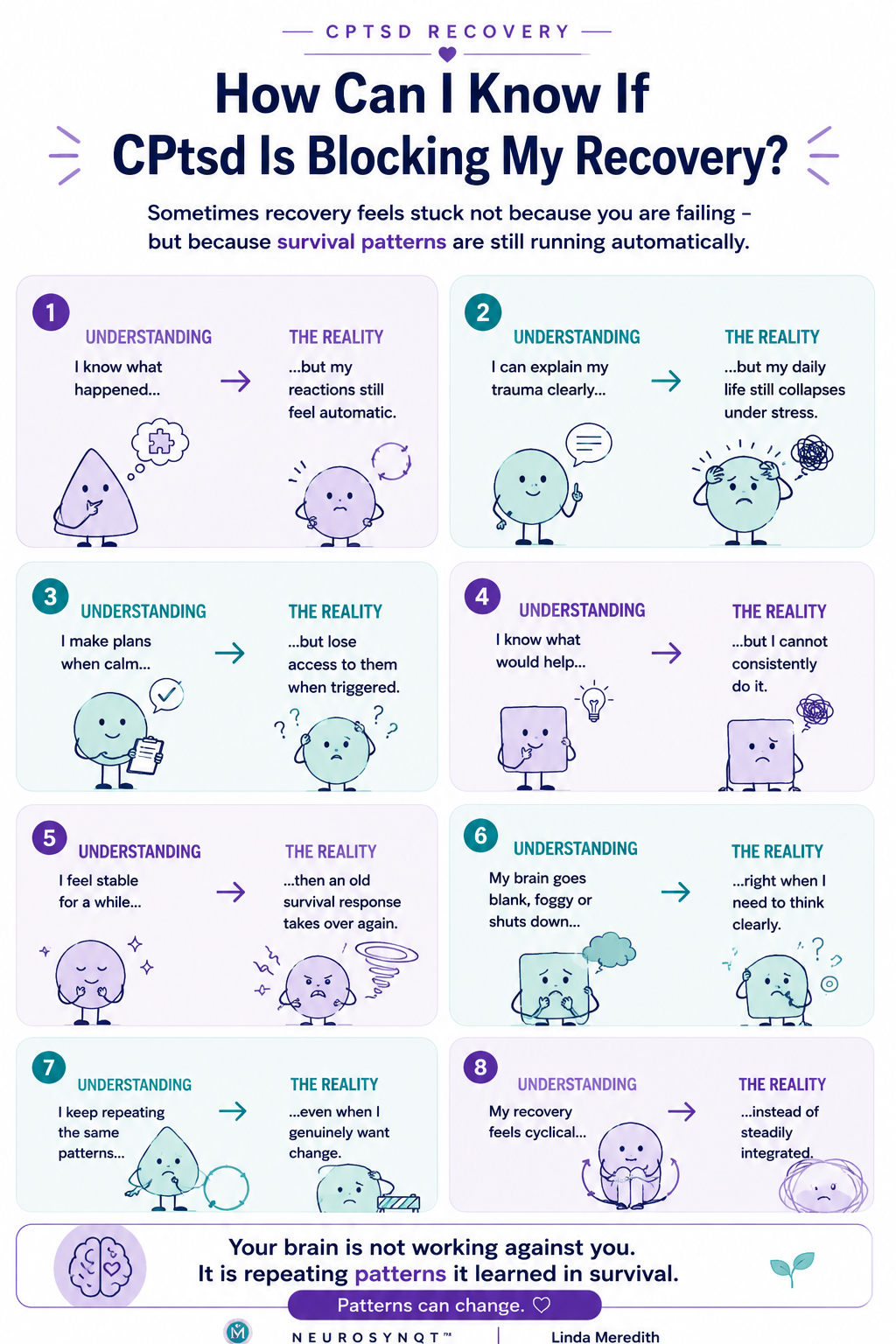

If you have ever thought, ‘I understand my trauma, so why am I still stuck?’ this video may help.

In CPtsd, insight is important, but insight alone does not always change the automatic patterns formed through long term trauma. This video explores some of the signs that CPtsd may still be affecting your recovery, especially when your reactions, decisions or capacity to follow through do not match what you logically know.

When To Take One Next Step

If this keeps happening - even when you can see it clearly then it’s not a lack of insight. 

It means something is happening underneath awareness that hasn’t been worked with directly yet.

If you have one of those moments that doesn't settle, you can bring it. One specific situation. The one that still doesn't make sense.

I'll break down what happened in real time, why that shift occurred, and where your focus needs to go if you want it to begin changing.

You don't need to explain everything. Just the moment. 👉 Get Your Written Response: One Next Step

You don’t need to figure all of this out on your own. You just need one moment that doesn’t make sense - and a way to understand what’s actually happening in it, literally how you can recognise and take your one next step.


Effective. | Trauma. | Recovery. | Found Here.

Learn more about complex trauma recovery with Linda.
If you’re ready to take a proactive approach and want clear, practical answers that actually help, 1:1 sessions are available to support real, whole-person recovery.

Supporting integration that addresses intergenerational trauma at its source

By addressing developmental trauma at the level of organisation, NeuroSynqt™ supports:

  • more stable identity across contexts
  • improved relational capacity
  • consistent behavioural change
  • reduced reliance on coping cycles

This is where recovery becomes sustainable - not cyclical.


Stay connected:
Follow us on social media using the links below and sign up for our newsletter to receive special offers and updates on new content.
Thank you!
Created with