
Developmental Trauma, CPtsd & the Brain Series

DEVELOPMENTAL trauma impacts
THE BRAIN
DEVELOPMENTAL TRAUMA IS a Hidden Epidemic

Healing the professionals Through NeuroSynqt™
💡 Take the Developmental Trauma & Brain Impact Quiz
Every practitioner encounters clients who appear insightful yet remain stuck in cycles of self-sabotage, emotional flooding, or disconnection. What looks like resistance is often the brain’s survival logic still running the show. This course helps you see beneath those patterns to the real story the brain is telling.
Trauma and the Brain lays the foundation for every NeuroSynqt™ course. You’ll learn how developmental trauma reshapes perception, memory, and behaviour by interrupting the brain’s natural integration processes. When survival patterns form early, the adult client’s decisions, emotions and relationships are filtered through protection rather than possibility. Understanding this is the first step toward effective recovery.
Through clear explanations, reflective tools, and experiential activities, you’ll see how key brain regions - such as the amygdala, hippocampus, and prefrontal cortex - adapt to chronic threat, shaping identity and self-trust. You’ll explore why traditional approaches focused only on emotions or behaviour often fail, and how a brain-centred, experiential approach reconnects the person to their own sense of safety, curiosity and agency.
By the end of this unit you’ll recognise survival patterns as adaptive design, not dysfunction. You’ll be able to translate complex neuroscience into simple, compassionate language that clients can relate to, building the bridge between understanding and integration. This isn’t just theory - it’s the entry point into helping clients rebuild a working relationship with their own brain.
The Missing Link in
CPtsd Recovery
Most trauma education stops at awareness. Clients understand their triggers but still live inside them. The missing link is not more emotional language or behaviour management - it’s understanding how the brain itself keeps replaying protection long after the danger has passed.
Complex trauma is not a failure of willpower or emotional maturity. It’s the brain doing exactly what it was wired to do under chronic threat - prioritise survival over reflection, connection or growth. When practitioners learn to recognise how survival states shape thought, memory, and decision making, they stop fighting the symptoms and start working with the brain’s logic instead of against it.
This unit shows why trauma recovery must start at the level of integration, not regulation. You’ll explore how the brain’s communication networks - especially those linking emotion, reasoning, and identity - become disconnected under sustained stress and how to safely guide clients back into coherence without triggering overwhelm.
Through the NeuroSynqt™ lens, you’ll see why integration creates regulation naturally. This approach reframes trauma recovery as reconnection - between hemispheres, between memory and meaning and between the client’s present self and their history. When connection returns, regulation follows.
🎧 Prefer to Listen While You Learn?
Complex trauma can make on screen reading feel heavy or disconnecting. Listening allows the brain to process the material more gently and helps you stay present as you learn.
You can now have your slides read aloud on any device using built in accessibility tools.
Full instructions for Mac, iPhone or iPad, Android, and Windows are included right inside this course.
💜 This feature is designed to support your learning style, not replace it.
🎙️ Linda’s teaching, coaching, and voice remain throughout every course. You will still hear Linda guiding you through the concepts, unpacking examples, and coaching from the slides as part of your learning experience.
👉 Use the Have Your Slides Read To You tab inside the course for device specific instructions and start listening your way through the course.
Here’s what you’ll walk away with…
By completing Core Unit 1, you’ll gain a clear, neuroscience-grounded understanding of how trauma reshapes the developing brain - and the tools to translate that knowledge into compassionate, practical support for clients.
You’ll be able to:
-
Recognise how developmental trauma interrupts integration across key brain regions responsible for emotion, reasoning, and self-identity.
-
Identify trauma-based perception loops that distort memory, decision making and connection, even when clients seem “high functioning.”
-
Explain the survival logic behind trauma-driven behaviour in simple, relatable language that dissolves shame and builds safety.
-
Map adaptive brain responses such as freeze, fawn, or shut-down to the client’s lived experience without pathologising.
-
Use experiential, brain-based interventions that restore coherence between thinking, feeling, and meaning.
-
Spot the seven key areas of impact that shape adult coping, boundaries, and relationships.
-
Understand why trauma memory is stored in fragments and how to support gradual narrative reconstruction.
-
Help clients reconnect with curiosity and reflection - the brain’s natural pathway out of survival states.
-
Develop confidence in brain-based counselling through a practical, trauma trained framework designed for real-world complexity.
-
Work safely with the brain’s pace of healing - guiding reconnection before regulation, so progress lasts.
The depth of the content and the support this course offers is phenomenal! If you’re on the fence, I’d highly recommend taking the leap
Candace Alley,
CEO candacealley.com
Over the past year and a half, Linda has helped me experience growth that I thought was impossible. In a loving and compassionate manner, she has taught me tools and strategies to manage my trauma symptoms. Most importantly, she made me feel heard, seen, and understood.
Lisa Armele,
Ed.S., MA., CAS.
Linda Meredith is a powerhouse when it comes to bringing research and information together to help us understand complex trauma. More importantly, she breaks things down in a way that is easily accessible. The homework isn’t about memorising terms - it’s about embodying the knowledge while healing ourselves and supporting our clients. practically and effectively. As a professional who has had burnout 3 times, Linda's work has helped me not only return to work but to do so in increasing good health whilst helping clients globally achieve the recover results they also desire.
Sherry Yuan Hunter,
CEO Sandwich Parenting
What Makes the 6 Courses Impactful?
The six courses that make up this elective are not stand-alone lessons - they are a progressive system of integration. Each module builds upon the last to help practitioners and individuals move from understanding trauma to working confidently within the brain’s adaptive design.
Core Unit 1 lays the groundwork by revealing how developmental trauma shapes identity, emotion, and meaning-making through the brain’s own survival pathways. When practitioners understand this, every later unit - from emotional development to attachment repair and spirituality - makes sense through a cohesive framework.
Traditional trauma education often separates emotion, cognition and behaviour. NeuroSynqt™ brings them back together.
By learning how trauma changes neural communication between regions such as the prefrontal cortex, amygdala, and hippocampus, you’ll see why so many clients relapse into old patterns despite insight or motivation. Insight alone doesn’t heal disconnection - integration does.
Each of the six courses offers a piece of the map back to wholeness, addressing trauma where it actually lives - inside survival-coded neural pathways. Together, they give you the language, the neuroscience, and the experiential tools to create change that lasts, both for you and your clients.


🧰 Made for Those Who Work in the Messy Middle of Healing
- Counsellors, psychologists, and social workers seeking advanced training in CPtsd and narcissistic abuse recovery.
- Allied health and pastoral care professionals supporting trauma-bonded or abuse-impacted adults.
- Educators and community leaders wanting a neuroscience-based, trauma-trained framework for complex trauma recovery.
- Students and emerging practitioners building professional credibility with CPtsd-specific, brain-based practice.
- Practitioners working toward certification and CEUs in CPtsd Recovery.
- Individuals with lived experience pursuing structured, professional-level CPtsd education and personal integration.
🌟 The Shift You’ll See in Clients (and Yourself)
Imagine working with a client who says, “I understand why I react this way, but I still can’t stop it.”
That gap between insight and change isn’t resistance - it’s disconnection. Their brain is still coded for protection, not reflection.
Through this course, you’ll begin to see clients differently - not as stuck or avoidant, but as operating within a survival architecture that once kept them alive. You’ll develop the ability to translate what looks like emotional chaos or shutdown into clear, brain-based understanding.
Professionals report that once they learn this framework, their sessions shift from firefighting symptoms to building connection. Clients begin to:
-
Recognise why they can’t just “think” their way out of trauma.
-
Feel genuine relief when their responses finally make sense.
-
Experience fewer shame spirals because they understand their brain’s logic for protection.
-
Reconnect with curiosity, creativity, and hope as integration begins.
For practitioners, the change is just as powerful.
You’ll find yourself:
-
Approaching complexity with calm confidence instead of burnout.
-
Knowing exactly where to start when a client’s system feels “all over the place.”
-
Using experiential, brain-based tools that create visible shifts in real time.
The NeuroSynqt™ approach restores compassion - for both practitioner and client - by showing that healing isn’t about fixing broken people. It’s about helping the brain remember connection, coherence, and safety from the inside out.

Course 1
Course 2
Course 3
Course 4
Course 5
Course 6
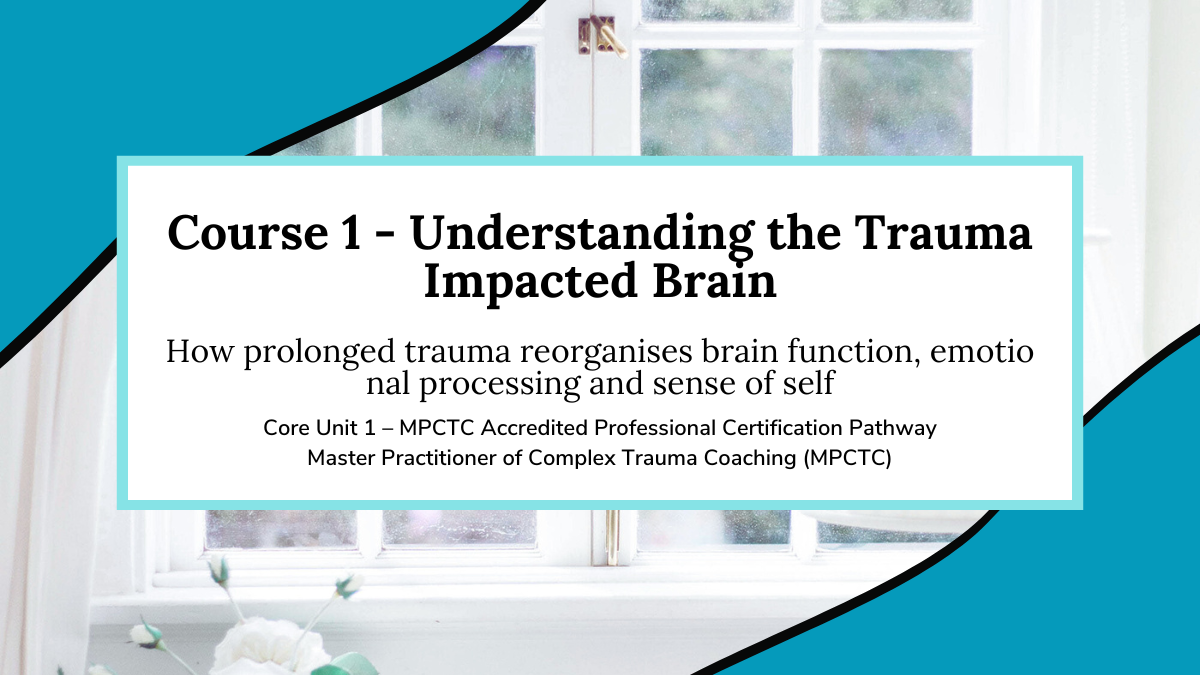
Course 1 - Understanding the Trauma Impacted Brain
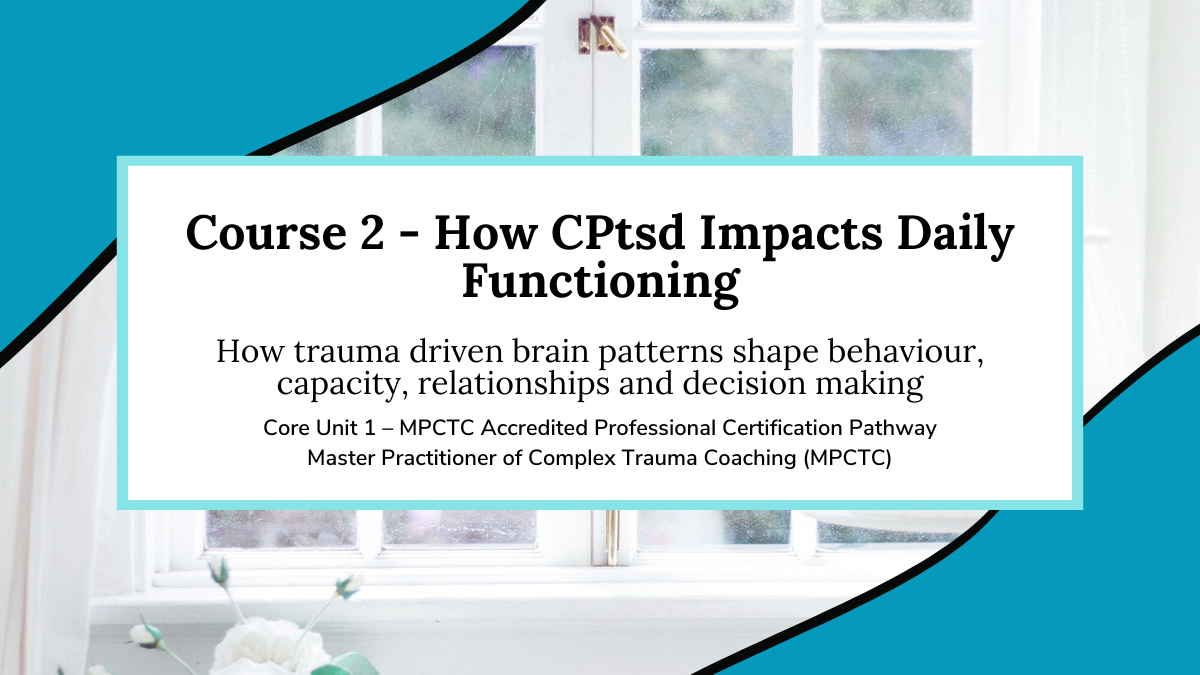
Course 2 - How CPtsd Impacts Daily Functioning
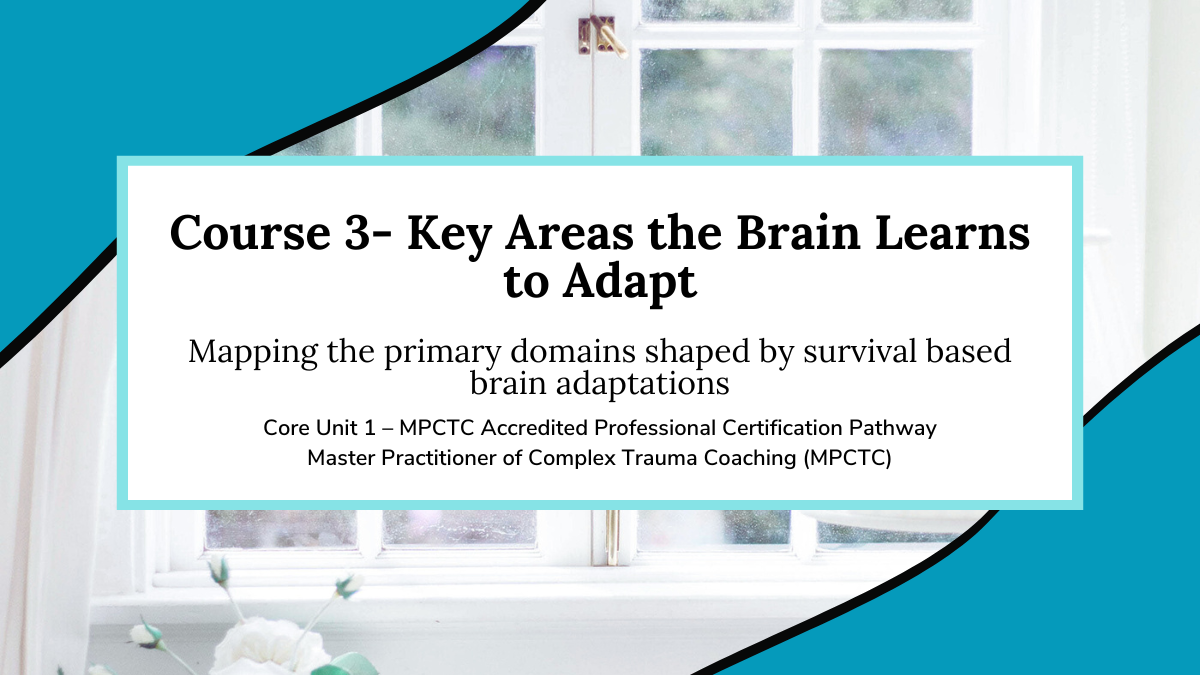
Course 3 - Key Areas the Brain Learns to Adapt
Course 4 - Why the Brain Leans Toward Threat - and How We Work With It
Course 5 - Trauma, Identity & Meaning (TIM)
Course 6 - Recognising Triggers Without Becoming Them
Developmental Trauma, CPtsd & the Brain Series Outline
💻 Learning That Fits Real Life ➡️
Accessible. Practical. Designed for the trauma-trained mind.
🌱 Free Weekly Supervision & Study Space
CPtsd Education
Extra CPtsd Information
Homework Canva Templates
Client Materials
Business Development
Extra Coaching Tools

🧠 The NeuroSynqt™ Difference
Adults with Complex PTSD have lived in trauma states for so long that dissociation, fragmentation, and survival scripts feel normal. Many do not recognise they are dissociating until explicitly taught how to begin reconnection and how to recognise that the brain is the driver.
Most models (polyvagal, IFS, bottom-up somatics) assume regulation is the starting point. In reality:
-
Regulation is not an entry point.
-
Regulation is a byproduct of integration.

Dr Dan Siegel
Why Being Trauma-Trained Changes Everything
Beyond trauma-informed into truly brain-based care
📊 Grounded in Science, Guided by Humanity
Bringing research and lived experience together
Recent studies show:
-
🧩 Up to 80% of adults raised by narcissistic or emotionally unavailable parents show symptoms consistent with complex trauma
-
🩺 1 in 3 mental health professionals report moderate to severe burnout (APA, 2024)
-
🧠 Neuroscience confirms that trauma impacts perception, not just emotion - changing how clients interpret safety, power, and connection
This course bridges clinical research with experiential recovery, giving professionals language that resonates with both the data and the heart.
Trauma Informed vs Trauma Trained
Linda Meredith
Passionate, Innovative, and Dedicated to
Complex Trauma Recovery
An Advanced, Neuroscience-Based Approach for Mental Health Professionals
Real reviews. Real professionals. Real impact.
📚 Explore Other Courses
🏆 Certification Pathway
- Individual Courses - like Core Unit 7, focusing deeply on identity repair
- Full Certification - becoming a Master Practitioner of Complex Trauma Counselling, accredited globally and eligible for CEUs
This certification has been peer-reviewed and accredited by professionals in the trauma field, ensuring credibility and recognition worldwide.
Developed by Linda Meredith through years of study and application with both clients and her own recovery, the NeuroSynqt™ framework is a unique, brain-based approach that delivers results in real-world practice.