My Complex Trauma Story
Right in the middle of the busyness of life, surrounded by good friends, family and work colleagues, the feelings of exhaustion, confusion and loneliness persisted. It just didn't make sense to me. I had everything anyone could ever want, yet life wasn't working for me, and it should have been.
This article was posted on our original blog at Healing from Complex ptsd, September 25th 2021.
My Complex Trauma Story
Right in the middle of the busyness of life, surrounded by good friends, family and work colleagues, the feelings of exhaustion, confusion and loneliness persisted. It just didn't make sense to me. I had everything anyone could ever want, yet life wasn't working for me, and it should have been.
I know the feelings of shame and guilt when trying to change how I mother when I've had no experience, no example, of a loving, kind, generous, I'm on your side, supportive mother. I know the feelings of pure frustration of wanting and needing change and not knowing which way to turn.
I know the sensations of "there's something wrong with me" the feelings of certainty that something is not right, I'm not putting pieces together and I know the deep sense of being upset and not being able to put words around what is happening for me.
And I fully know the experience of sitting in the office of a Psychologist, pouring out my heart and soul about how things in my life seem all together, of the normal story of life, having achieved the socially acceptable story of the husband, the house, the kids, the job helping other people and yet I KNOW there is something not right for me.
Of said Psychologist saying to me "well, you're doing better than any of my other clients, so you'll be fine." I know those tears you shed because I shed them in abundance too when the door shut and it seemed as though there was no help for me.
Oh, and I can never forget the unshed tears as I battled post natal depression for over 5 months, alone, in a house filled with 4 adults and 3 kids, and no one could see I wasn't able to fully function, because, well, how do you admit you're not really functioning when in our family we don't ever talk about these things. Not ever.
Then there was the train wreck visit to the doctor once I found the courage to say "I've got post natal depression." His instant shock and immediate response of "you? No, not you."
Why? Why not me? Oh yes, that's right, I'm really good at appearing together, confident, functional and making things happen. So, naturally, why would mental health hit me out of nowhere? Sigh. Those days before the internet we have today were a struggle in finding help, in finding someone, anyone, who understood, that things in my life internally were just not producing a vibrant, healthy, happy life.
And I should have been able to have that vibrant, healthy, happy life as an adult able to make my own choices in regards to how I conducted my life.
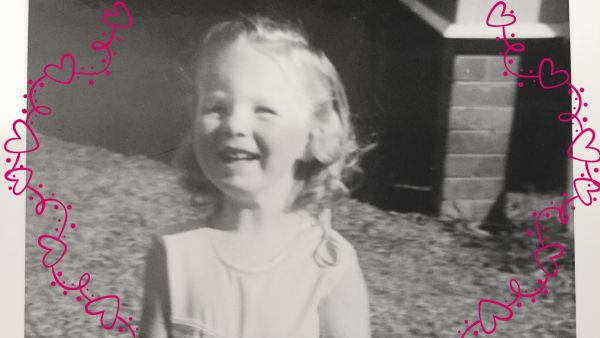

Education and Hindsight have given me a picture of all that was passed onto me, that I had zero clue would impact my health. For those that know me already you are aware I spent two and half years bedridden, couldn't walk, talk, eat or bathe myself. I literally had a full time carer. This was the ultimate result of my brain and body holding onto to undischarged distress and memories I had no idea where not filed away. It was the result of not having a procedural memory to show me how to change my life, of also having an unknown psychological wound, and unknown spiritual wound impacting my physical life. It was years of inner child, meditation, self reflection work that didn't cross the physical barriers to heal my brain and body. It was being the first generation to say the dysfunction and maladaptive behaviours stop with me before these words were even part of my vocabulary.
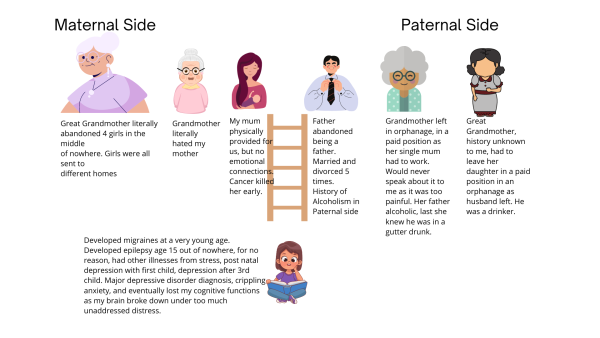
Let's take a look at a few excellent diagrams to explain how and why our health goes down hill through unresolved trauma.
Whilst the first image explains how trauma can impact a child's development from the mothers perspective I heard recently scientists are having breakthroughs in how it is passed down through fathers via the sperm. This article is from 2014 when it was still being debated. At the moment I can't access the latest research from this year where advances in this area have been made.
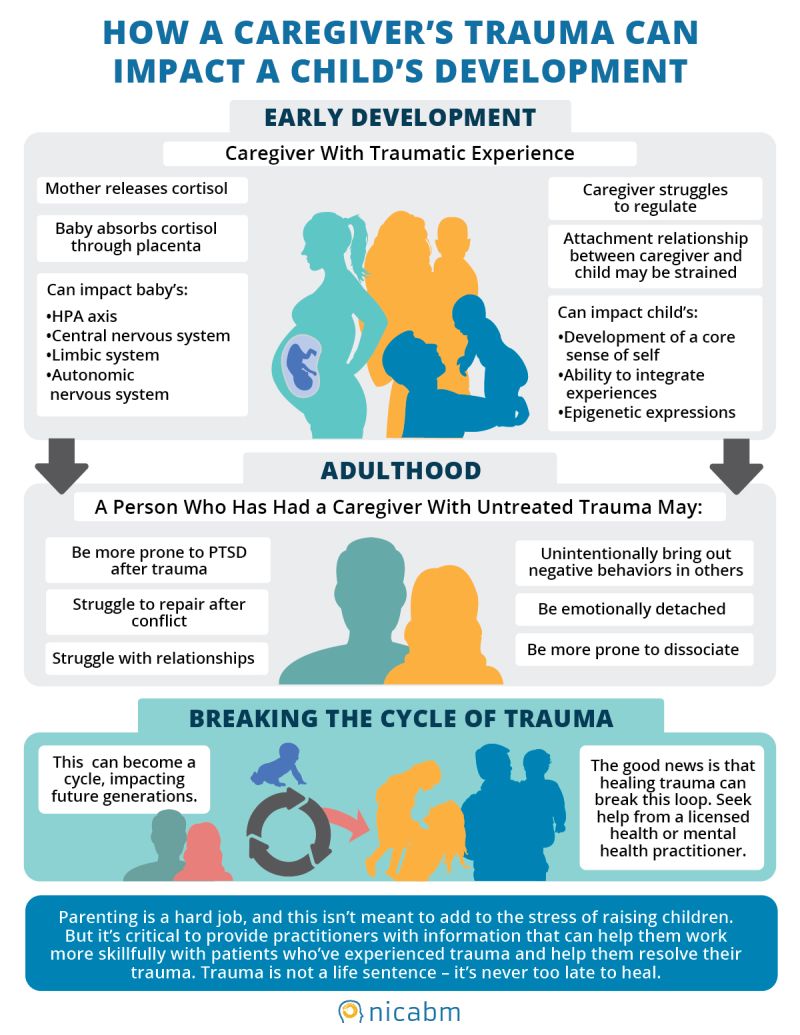
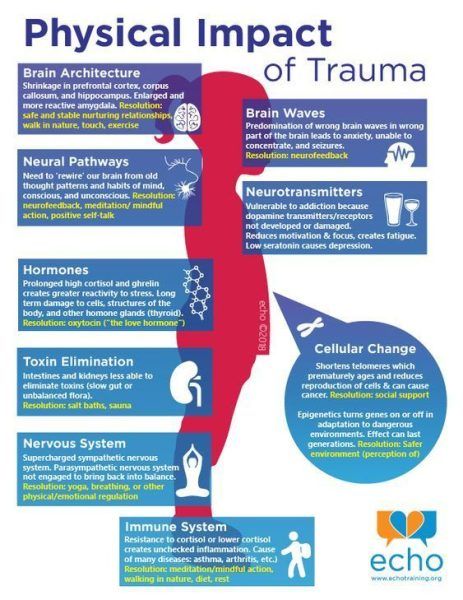
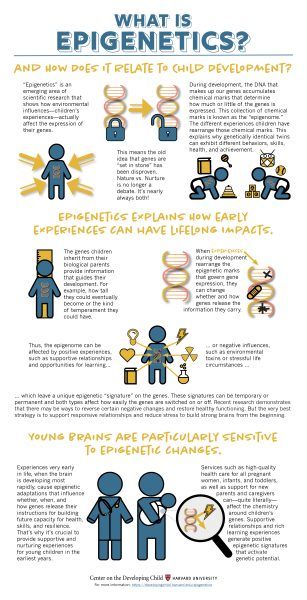
Let's take a look at a few excellent diagrams to explain how and why our health goes down hill through unresolved trauma.
For me, initially hearing Dr Nadine Burke Harris speak on the long term effects of childhood trauma was like finally, my life is beginning to make some sense. I thought once I left home I'd be able to make a healthy life for myself. Instead the older I got, the worse my health became. Now, I know from research, this is absolutely normal for Complex Ptsd. It doesn't necessarily show up in our health until later in life. The ACEs study has helped all of us understand our higher risks of increasingly bad health and shorter life span.
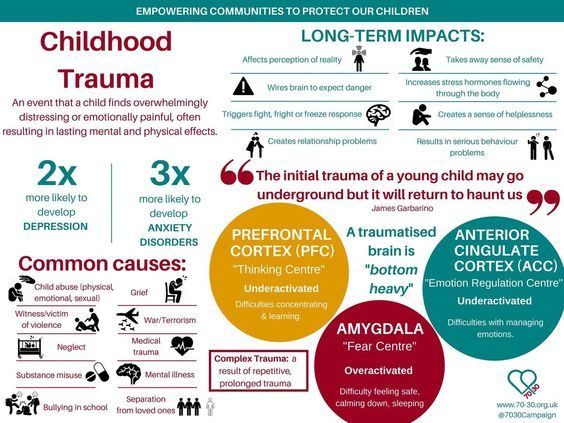
For me, the missing links to my good health came when I discovered the neuroscience of trauma. The impact on various parts of the brain from trauma impacts our health. The stored trauma wasn't being discharged, and the distress over my lifetime alone was not being discharged either. When I came across the following infographic which lists the symptoms of undischarged traumatic stress I came to understand how my health had reached a critical point.
For the most part my brain was stuck on "on" and flowed to "off" when I wasn't under immediate threat. The question then became how do I fix my brain. Most therapists use this concept to work within a clients window of tolerance. I, however, wanted my brain fixed so it would regulate my entire system without having me shut down and unable to work effectively.
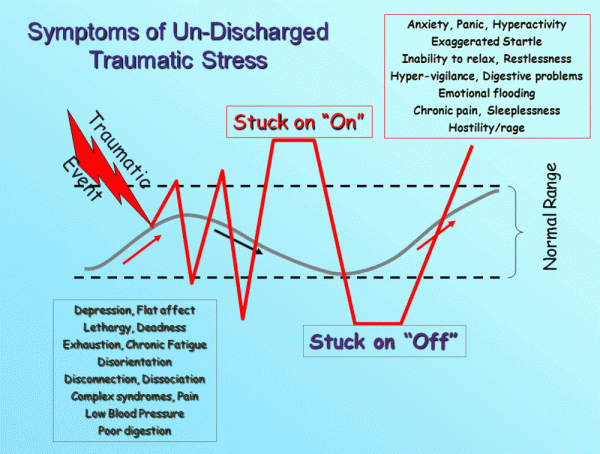
Over the last two and a half years I have been healing my brain by teaching it how to stay on line instead of going into dysregulation. I teach my clients how to do this and I teach them how to go within and work at a soul level too. My health isn't 100% because I keep stretching myself further out into the world.
If I was to live a life where I was a trauma coach working from home on my own and living an every day life with my family I would be living a life of good quality. However, I keep learning and I've set up a Complex Ptsd Membership because we need to address so many different areas when we have Complex Ptsd. I'm also in the midst of writing a complex trauma certification plus writing a course on the neuroscience for the membership.
When we stretch ourselves further than our brain has ever been wired to imagine I've discovered I have to keep working at teaching various parts of my brain it is okay to stay online and stay in the now. Not easy, but worthi it. I'm hoping one day my brain stops shutting down and I fall asleep, so I can get more work done. For now, I couldn't be happier that once again I can walk, talk, eat, bathe and no longer need a full time carer. I'm grateful for my adult children whose love leads the way, and for my new granddaughter who is nothing but a constant joy even though we've yet to meet in person.
Tell me, how are you? How can I help you navigate your way back to good health? What dreams do you have for your life? What changes do you want to make as a parent for your children? For your children's children? They are possible and it's best we begin now. It takes 2 generations to discharge the intergenerational trauma. #togetherwecan #onenextstep
Courses
CPtsd Education and the NeuroSynqt™ Training Institute
NeuroSynqt™ provides neuroscience based, trauma trained professional education in Complex Ptsd to practitioners internationally, alongside counselling and written response support for adults impacted by childhood developmental trauma.
Founded by Linda Meredith, Complex Trauma Educator and Clinical CPtsd Counsellor.
Popular
Developmental Trauma Self-Check
Over the past 12 months, how many and how often have you noticed:
-
I work hard to hold it together in public, then crash in private.
-
I struggle to name what I feel until it overloads me.
-
I say yes to keep the peace, then feel resentful or empty.
-
I feel loyal to people who do not treat me well.
-
I lose time or feel foggy when stressed.
-
I avoid closeness or over-attach quickly, then panic.
-
I find it hard to trust my own judgement.
-
I feel shame when I try to set boundaries.
-
I need external approval to feel steady.
-
I push through fatigue instead of pausing.
How to use this:
0–3 items often: you may be using a few survival patterns.
4–7 items often: consider paced support to rebuild safety and choice.
8–10 items often: a trauma-trained professional can help you restore stability and connection.
Brain Impact Self-Check
Over the past 12 months, how often have you noticed:
-
My mind jumps to what could go wrong, even in safe moments.
-
I find it hard to remember recent details when I am stressed.
-
Decisions feel risky, so I delay or avoid them.
-
I forget good experiences quickly and dwell on the bad.
-
I feel numb or overwhelmed, with little in-between.
-
I lose words when emotions rise.
-
I misread neutral faces or tones as negative.
-
I struggle to notice body signals like hunger, tension or breath.
-
I do better when someone I trust is nearby.
-
I feel different “versions” of me in different settings.
How to use this:
0–3 often: some protective habits; gentle self-care may help.
4–7 often: consider trauma-trained coaching to build daily brain skills.
8–10 often: a paced, brain-based plan can restore clarity, memory and confidence.
For formal assessment, use recognised measures:
-
ACE-IQ or ACE-10 for adversity history (education only on public pages).
-
ITQ (International Trauma Questionnaire) for ICD-11 PTSD/Complex PTSD.
-
DERS for emotion regulation, DES-II for dissociation, PCL-5 for PTSD symptoms.
-
PHQ-9, GAD-7 for mood and anxiety; OSSS-3 for social support.