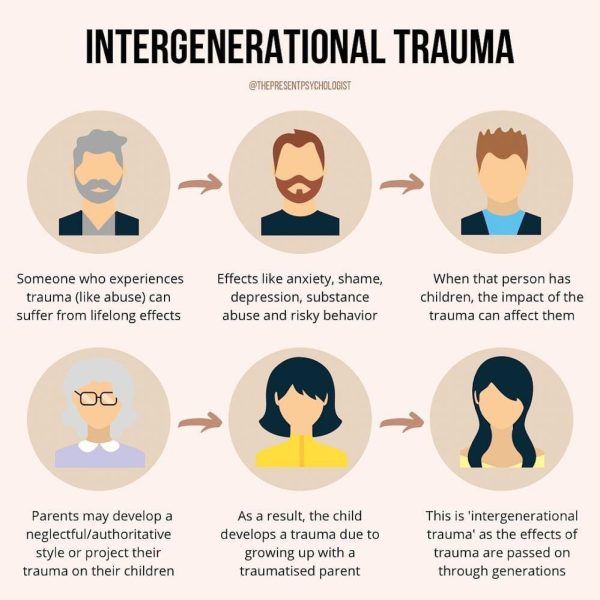
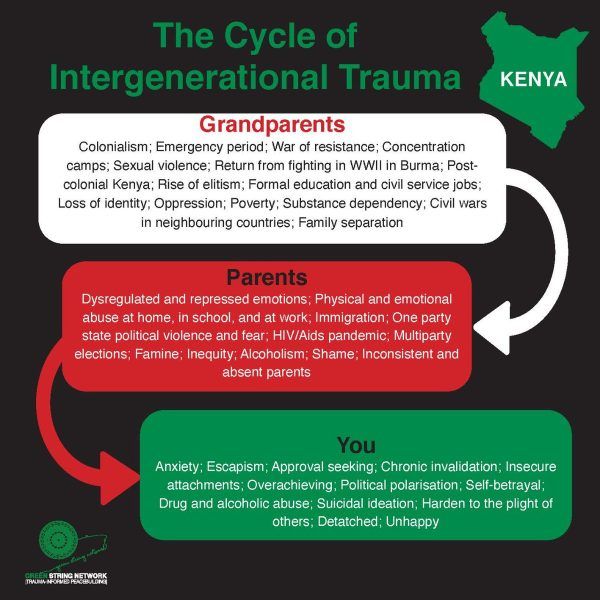
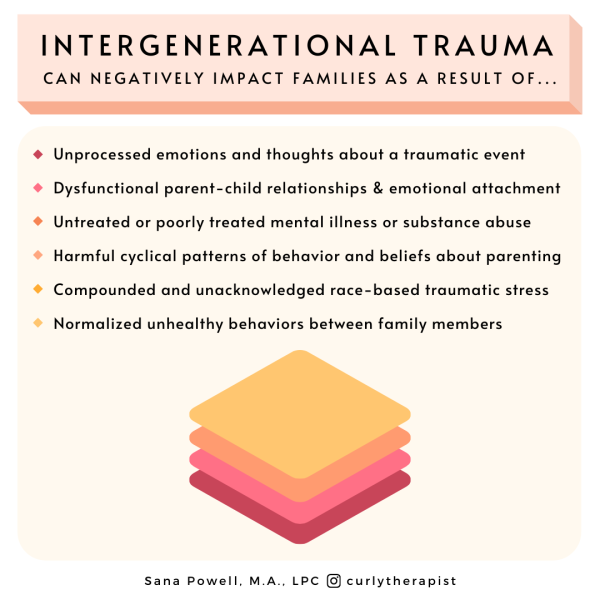
Intergenerational Trauma is also known as Transgenerational Trauma or historical trauma and relates to trauma being passed down from generation to generation. The following infographics and articles will explain how this happens.
Recently on the
Healing from Complex Ptsd Instagram account we were talking all things Epigenetics and Intergenerational trauma. Some asked for more information, some asked for reference material. I'm going to include a bit of both below so that you can go on your own exploration of curiosity and learning and discover what this may, or may not, mean for you.
Underneath each infographic or picture image is a link to further information from reference material to blogs by specialists.
Intergenerational Trauma is also known as Transgenerational Trauma or historical trauma and relates to trauma being passed down from generation to generation. The following infographics and articles will explain how this happens.
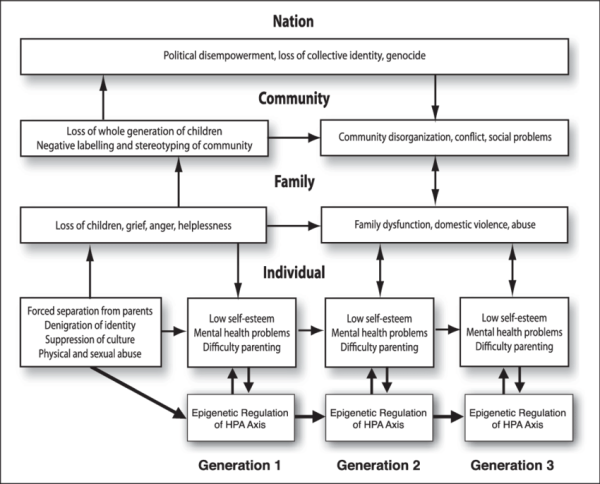
Transgenerational Transmission of Historical TraumaThe diagram depicts some of the hypothetical pathways through which the effects of trauma and loss may be transmitted across generations through processes at multiple levels, including: epigenetic alterations of stress response; changes in individuals' psychological well-being, self-esteem, and self-efficacy; family functioning; community integrity and cultural identity; and the continuity of identity and collective efficacy of whole nations or peoples. (Adapted from Kirmayer et al., 2007).
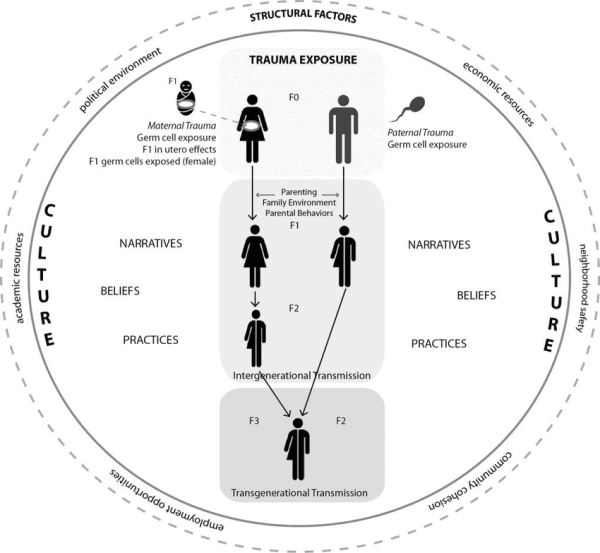
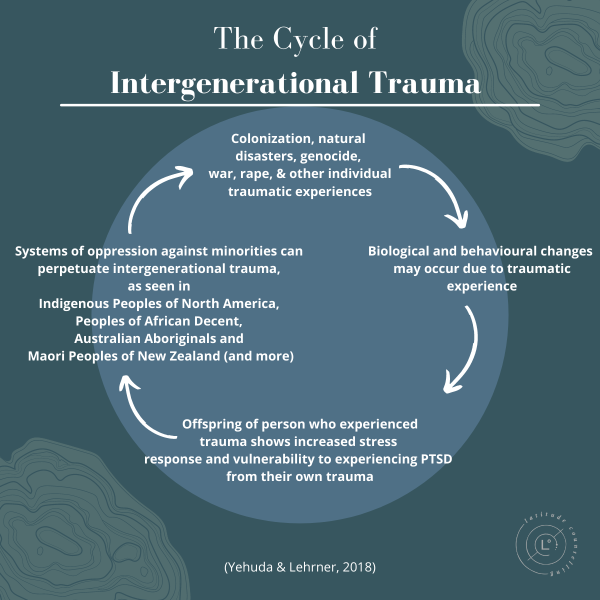
Intergenerational trauma is a transfer of trauma from the parent who has directly experienced trauma to their offspring. This transfer can happen either biologically, through epigenetics (changes made to a person's DNA from stimuli in the environment), or through the environment the offspring shares with the parent.
Research shows “...findings of an increased prevalence of PTSD among offspring with parental PTSD…” (Yehuda & Lehrner, 2018).
Trauma from colonization, natural disasters, genocide, war, rape, assault, and other individual experiences can lead to epigenetic and behavioural changes. These changes can be passed on to children (Yehuda & Lehrner, 2018).
Systems of oppression and dominant ideologies, such as colonization, racism, and
#intersectionality can perpetuate traumatic experiences for offspring, contributing to the cycle of intergenerational trauma.
#culturallyinformedtherapy,
#cognitivebehaviouraltherapy (Pleines, 2019),
#dialecticalbehaviourtherapy (Kohrt et al., 2016) and other forms of
#psychotherapy have been found to be effective in working with those experiencing intergenerational trauma .