The loneliness tore through me seated at the school waiting for my kids. I could not envision what my life would be like now, having literally lost everyone and everything. Loneliness is a deep, physical feeling. The one thing I never gave up on was the belief that I had done the right thing leaving despite no one else seeing or believing what I knew to be true.
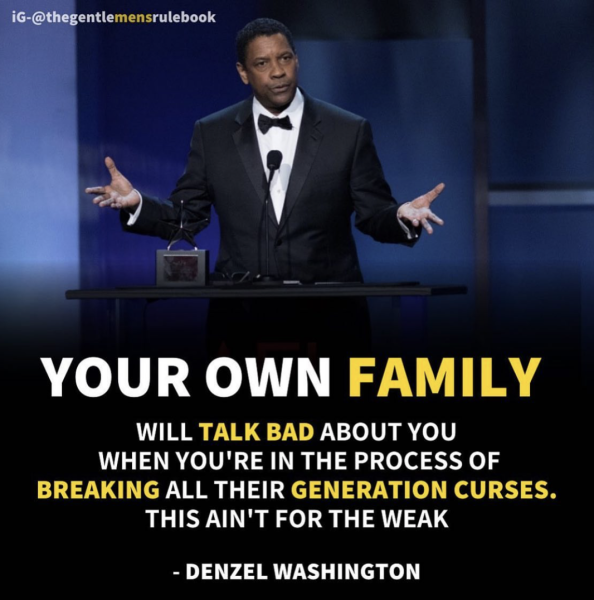
"Trauma will continue to travel through Family lines until someone is prepared to stand up and say "no more, this ends with me."
- Linda Meredith
Raw & Real: This is so very precious to me. My daughter Chloe, who is married and lives in another country, sent me this with the words "go you ma!" and I just about cried tears of joy.
You see many years ago now I had to make a choice to leave their dad. What was happening behind closed doors would have left my children in a worse state than I was. I'd already been raised in a family with intergenerational trauma and I was not going to have my kids raised with it as well.
During those years when I chose to leave what was seemingly the "perfect" life i.e. the house, the cars, the business premises etc I paid the highest price of all. My family chose a relationship with my ex-husband over a relationship with me. My ex-husband also chose a relationship with them, people he didn't like when he was married to me.
To say that I was devastated to lose everything and everyone was an understatement. Oh, the icing on the cake was when the ex-husband got into a relationship with the only close friend I had at that time. And then both of them wondered why I couldn't be friends with them. I wondered why the best friend didn't understand the betrayal I felt. She was now in a relationship with the man who I had to leave, and I had told her why. Being with him meant she didn't believe a word I said.
The loneliness tore through me seated at the school waiting for my kids. I could not envision what my life would be like now, having literally lost everyone and everything. Loneliness is a deep, physical feeling. The one thing I never gave up on was the belief that I had done the right thing leaving despite no one else seeing or believing what I knew to be true.
Actually, the only ones who knew the truth were the children. Now those children are emotionally intelligent, kind, loving, messy adults who know how to have real and raw conversations. Now these loving, messy adults thank me for being willing to step up and not settle for another generation of toxic, dysfunctional family traditions. Now these loving, fun, messy adults will raise the next generation of children even better than I have raised them.
And I tell you, there is NO greater joy on this earth than knowing the buck stopped with me as an adult to do the right thing for my children. The kids know the truth we lived and now they say thank you for leaving to change the generations to come. And yes, I raised them to love their dad and I raised them it was okay to say that dads behaviour is not okay. Which, btw, is an awesome thing to do because they also know they can tell me if my behaviour isn't okay too. But that's another edition.
So much time has passed now. Their dads relationship didn't last, she left. He's passed away now, and we miss his laughter. My life is healing from the trauma in a second marriage, and I occasionally see family. Their rules and their traditions don't allow for them to seek change, to seek deeper connections. And that's okay. I've learnt to love, to forgive, to keep growing my core self, and that love holds more answers to a healthy future than toxic traditions ever will.
Blessings and dreams,
Linda xo